
Everything there is to know about
AI and SEO
AI Content Creation in 2026: Does It Actually Work for SEO?
Here’s a weird fact about 2026 search results: articles written entirely by ChatGPT rank worse than articles written entirely by humans 10 years ago.
That’s not because AI is bad at writing. ChatGPT, Claude, and Gemini can produce clean, grammatical, topic-relevant prose in seconds. The problem is that “clean and grammatical” isn’t what wins in search anymore. What wins is first-hand experience, specific opinions, real data, and content that genuinely helps a reader solve a problem. Pure AI output checks none of those boxes.
This article is going to do something most articles about AI content creation don’t do. It’s going to take a real position and defend it: AI content creation works for SEO, but only when a human strategist runs the workflow. Pure AI content fails. Human-edited, human-optimized AI content wins. The workflow matters more than the tool.
We’ll cover what Google actually penalizes (it’s not what most people think), how to use AI in content correctly, the exact workflow iRankSEO uses for client articles, which tools are worth the money in 2026, and when you should just hire an agency instead of doing it yourself.
A quick credibility note before we dig in. iRankSEO has been producing AI-assisted SEO content for 100+ U.S. brands since 2023. We’ve watched the Google helpful content updates hit, shipped through them, and refined our workflow three times. What you’re about to read is what actually works, not what’s trending on LinkedIn.
AI SEO Resources to get started
- What is AI? Learn all about artificial intelligence and how it impacts SEO.
- Does AI generated content work for SEO?
- Learn how to use AI for SEO with these 11 tactics
- Partner with an AI SEO agency
Does AI Content Creation Actually Work for SEO in 2026?
AI content creation works for SEO in 2026, but only when a human strategist edits, fact-checks, and optimizes the AI output. Pure, unedited AI content consistently underperforms and often triggers Google’s helpful content classifier, causing ranking drops.
Google’s official position matters here. In a series of statements starting in early 2023 and reinforced through the March 2024 helpful content update, Google has been clear: AI-generated content is not automatically penalized. What is penalized is unhelpful content, regardless of how it was produced. The E-E-A-T framework (Experience, Expertise, Authoritativeness, Trustworthiness) is applied the same way to AI content as to human content. If it lacks experience or expertise, it loses rankings.
The three things Google’s systems actually reward: first-hand experience with the topic, clear topical authority across related content, and genuine usefulness to the reader. Pure AI content, by its nature, struggles with all three. It has no first-hand experience. It can mimic topical authority but rarely builds it. And its usefulness is limited by whatever generic advice it synthesizes from its training data.
The LLM angle is just as important in 2026. ChatGPT, Perplexity, Google AI Overviews, and Gemini cite content that’s structured clearly, factually specific, and shows clear expertise. Generic AI content usually fails at getting cited by AI engines for the same reasons it fails in Google rankings.
The real question isn’t whether AI content works. It’s whether your AI content workflow is good enough to produce something that Google and LLMs both reward. That’s a workflow question, not a tool question.
What Google Actually Penalizes (It's Not "Using AI")
Let’s kill the biggest myth in this conversation. Google does not scan your content for “AI fingerprints” and penalize you for using ChatGPT. If that was Google’s approach, the entire internet would have been deindexed by now.
What Google actually penalizes is different. And more specifically.
Three things consistently trigger Google’s helpful content classifier and cause ranking drops. First, mass-produced thin content. If a site publishes 200 AI-generated articles in 30 days with no editorial layer, Google’s systems flag the pattern. The issue isn’t the AI. It’s the scale without quality control. Second, content that exists only to manipulate search rankings. Pages targeting keywords with no genuine intent to help the reader get penalized, whether they’re AI or human. Third, content with factual errors, hallucinated statistics, or citations of sources that don’t exist. Large language models invent facts. If you publish those facts unchecked, Google eventually notices, and so do readers.
The March 2024 helpful content update was explicit about this. Google specifically targeted sites that were “using automation, including AI, primarily to manipulate search rankings” and producing “content at scale without a commitment to quality.” The wording was careful. The offense wasn’t using AI. The offense was using AI without quality investment.
Here’s the honest takeaway. Google isn’t looking for the AI fingerprint. Google is looking for the answer to one question: was this content helpful to a real human reader? Sites that pass that test rank whether they used AI or not. Sites that fail that test drop whether they used AI or not. The AI is incidental.
Reference: Google Search Central on AI-generated content guidelines
How to Use AI for Content Creation the Right Way
Knowing what not to do is step one. Knowing what to do is step two. Here are the five principles that separate AI content that ranks from AI content that flops.
1. Use AI for Research and Drafting, Not Finished Content
AI is excellent at synthesizing information, generating outlines, and producing a first draft in minutes. It’s bad at original thought, genuine expertise, and earning reader trust. Treat AI output as a starting point, not the deliverable. Every article iRankSEO ships has been through at least two rounds of human editing before it reaches the client or gets published. If the AI’s first draft is 80% of your final article, you’re doing this wrong.
2. Add First-Hand Experience the AI Doesn’t Have
Google’s E-E-A-T framework explicitly rewards first-hand experience. AI has none. Your job (or your agency’s job) is to layer in real examples, real client stories, real numbers, real opinions that only come from having actually done the thing. This is the single biggest difference between AI content that ranks and AI content that flops. Generic advice loses. Specific experience wins.
3. Fact-Check Everything the AI Writes
Large language models hallucinate. They cite sources that don’t exist. They attribute quotes to the wrong people. They get statistics wrong. If you publish AI content without fact-checking, you will eventually publish something false, and Google and your readers will catch it. Budget fact-checking time as a non-negotiable step in the workflow. Every statistic, every attribution, every “study found” claim gets verified against the actual source.
4. Optimize for Both Google and AI Engines at the Same Time
Good AI content workflow in 2026 includes structure for AI citation: clear definition sentences, direct answer-first paragraphs, clean schema markup, consistent entity mentions across the site. This is the GEO (Generative Engine Optimization) layer most content workflows skip entirely. Content that ranks on Google but never gets cited by ChatGPT or Perplexity is leaving half the traffic opportunity on the table. Build for both from the start.
5. Keep a Consistent Human Voice Across All Content
AI output drifts in tone. One article sounds corporate, the next sounds casual, the next reads like a press release. Readers notice. Google’s helpful content signals notice too. A real editor’s job is making sure every piece sounds like it came from the same brand, the same voice, the same point of view. This is where in-house teams often fail. Without an editor enforcing voice, AI-assisted content quality degrades within months.
Follow these five principles and your AI content workflow starts producing work that actually ranks. Skip any of them and you get something that looks like content but doesn’t perform like content.
How We Use AI in Content at iRankSEO
Most agencies either hide their AI usage, pretend they don’t use AI at all, or claim some proprietary “AI-enhanced” process that nobody explains. iRankSEO is transparent about this. Here’s exactly how our team produces content for clients.
Step 1: Human-Led Strategy
Before any AI tool opens, a senior strategist maps out the content brief. Target audience, primary keyword, search intent, competitive angle, article structure, and the specific goal (rank, convert, build authority, or all three). This step is 100% human. AI does nothing here. If the strategy is wrong, no amount of polish in later steps saves the article. Most AI content fails at this step, because most AI content workflows skip it entirely.
Step 2: AI-Assisted Drafting
A writer uses AI tools (ChatGPT, Claude, or similar) to generate an initial draft based on the strategist’s brief. Key rule: the AI draft is treated as research material and raw clay, not as the deliverable. Usually 40 to 60% of the AI’s original output gets cut in the next step. What remains is the structural skeleton, useful framing, and any factual summaries the writer verifies and keeps. The AI’s job is speed. Nothing else.
Step 3: Human Editing, Experience, and Optimization
A senior editor rewrites the draft from the ground up. Fluff gets cut. First-hand experience gets added. Real client examples and specific numbers go in where the AI generalized. Every statistic gets fact-checked against the original source. Keywords get optimized. Structure gets tightened for GEO citation. This is the most time-intensive step by a wide margin. It’s also where all the quality comes from.
Step 4: Quality Review and Humanization
Final pass for voice consistency, sentence rhythm, anti-AI-detection polish, and schema readiness. The article gets scanned by Originality.ai and GPTZero before delivery. If it reads as AI-generated, it goes back for more editing. No exceptions. Only clean, human-reading content ships.
The end result looks nothing like AI content and ranks like the human-written content it effectively is, because by the end of the process, that’s what it is.
AI Content Writing Tools That Are Actually Worth Using
Instead of listing 47 tools you’ll never actually use, here are the five categories that matter in 2026, with the leading options in each.
1. General-Purpose Drafting: ChatGPT, Claude, Gemini
Three LLMs that handle most drafting, research, and outlining tasks. ChatGPT for speed and familiarity across the team. Claude for longer-form writing and nuanced voice. Gemini for integration with Google’s ecosystem and live search data. Most agencies use all three for different jobs.
2. SEO-Focused Writing: Surfer SEO, Clearscope, Frase
These combine AI drafting with real-time SERP analysis. Useful for matching keyword intent, covering topical sub-entities, and outranking competitors on technical SEO factors. Not magic, but genuinely helpful. Surfers are the most popular. The clearscope is the most polished. Frase is the most affordable.
3. Content Optimization: Grammarly, Hemingway, ProWritingAid
Grammar, readability, and style checks. Essential for the editing pass. Not AI content tools per se, but critical to the final polish. Grammarly catches most issues. Hemingway enforces short, clear sentences. ProWritingAid is deeper but takes longer.
4. Research and Citation: Perplexity, You.com
AI-powered search engines that generate summaries with live citations. Excellent for pulling accurate facts, recent statistics, and current industry data the main LLMs might miss or hallucinate. Use these to verify AI-generated claims before publishing.
5. AI Detection: Originality.ai, GPTZero, Copyleaks
Not writing tools, but essential. Run your final draft through at least one of these before publishing. If it reads as AI-generated at above 30 to 40%, rewrite until it doesn’t. These tools aren’t perfect, but they catch the worst AI fingerprints fast.
The tool matters less than the workflow. A professional editor with ChatGPT beats an amateur with a $500/mo AI content suite, every single time.
Should You DIY AI Content or Hire an Agency?
No sales pitch here. Just the honest version of both paths.
DIY is the right call if:
- You have at least one strong editor with SEO knowledge already on your team
- You can dedicate 4 to 6 hours per article for the full workflow (strategy, AI draft, human editing, optimization, QA)
- Your content volume need is under 4 to 8 articles per month
- You’re comfortable spending 3 to 6 months learning what works before you see strong ranking results
- You want to keep the workflow knowledge in-house long term
Hire an agency like iRankSEO if:
- You don’t have an SEO-trained editor in-house and don’t want to hire one
- You need 8+ articles per month consistently
- You want the work to actually rank and get cited in AI search, not just exist on the site
- You want AI SEO optimization (GEO, AEO, schema markup) layered on top of the content
- Your team’s time is better spent on the business than on content production
There’s no wrong answer. Some of iRankSEO’s clients started DIY, hit a scale or quality ceiling, and then brought us in. That’s a reasonable path. Others came to us from day one because they knew they didn’t want to build this muscle internally. Either way works.
How you can rank in AI answer engines
Struggling to see results from your SEO efforts?
If you’d rather skip the 12-month learning curve, iRankSEO handles AI content creation as part of our AI SEO Services. Boutique team, senior editors on every piece, transparent monthly pricing starting at $500. No contracts over 6 months.
Why you should optimize for AI search
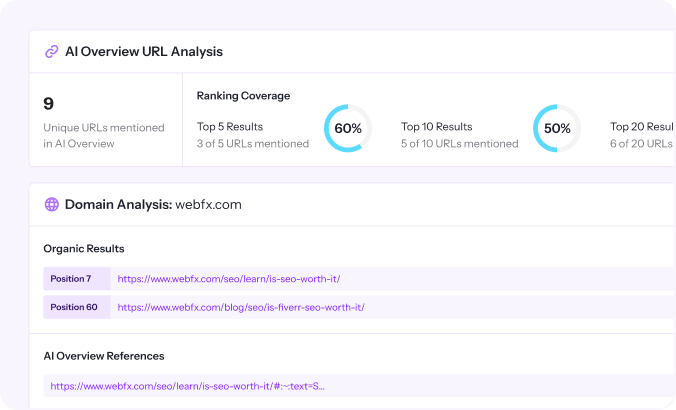
Check if your site appears in AI Overviews
The Bottom Line on AI Content Creation
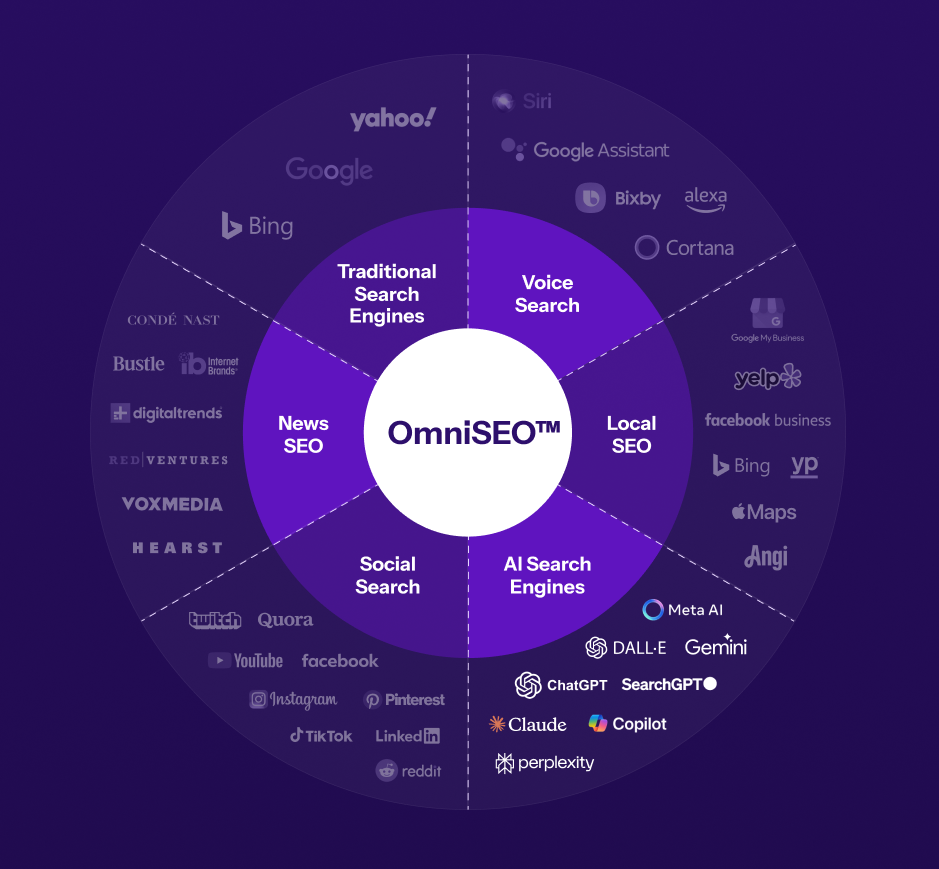
Rank Everywhere with iRankSEO®
Consider all searches in your SEO strategy!
FAQ's About AI Content Creation
Does Google penalize AI-generated content?
No, Google does not automatically penalize AI-generated content. Google penalizes unhelpful, low-quality, or mass-produced content that doesn’t serve readers, regardless of how it was produced. AI content that includes first-hand experience, original insight, and proper editing can rank just as well as human-written content.
Is AI content creation good or bad for SEO?
AI content creation is good for SEO when a human strategist controls the workflow, and bad for SEO when raw AI output gets published without editing. The tool itself is neutral. The quality of the workflow determines whether AI content helps rankings or hurts them. Most agencies get this wrong.
How do you humanize AI content so it ranks?
What's the best AI tool for content creation in 2026?
Can AI-written articles rank on page one of Google?
Yes, AI-written articles can rank on page one of Google in 2026, but only when the AI output has been heavily edited by humans, optimized for target keywords, enriched with first-hand experience, and fact-checked. Pure unedited AI content almost never ranks. Human-edited AI content regularly reaches page one within 3 to 6 months.
Do ChatGPT and Perplexity cite AI-written content?
ChatGPT and Perplexity cite content based on structure, factual specificity, and authority signals, not on whether the content was originally drafted with AI. If your AI-assisted article has clear definitions, direct answers, schema markup, and strong entity consistency, LLMs will cite it. If it’s generic AI-generated fluff, they won’t.
How much time does AI actually save in content creation?
AI saves around 30 to 50% of the total time in a full content workflow in 2026, not the 90% most AI vendors claim. The savings come at the drafting stage (AI produces an outline and first draft fast). Strategy, editing, fact-checking, and optimization still take human time. Agencies that skip those steps produce content that doesn’t rank.
Should I disclose when content was written with AI?
Google does not require disclosure of AI-assisted content as of 2026, and most SEO agencies don’t disclose. Disclosure is a brand choice, not a legal or SEO requirement. Some brands disclose for transparency. Most simply focus on quality and treat AI as an internal tool. Either approach is fine.
What’s New in
SEO?
iRank SEO ®
SEO is evolving. Focusing only on Google rankings is no longer enough to stay competitive in today’s landscape of AI-powered search, social media discovery, and conversational search engines.
Introducing iRankSEO®, a proprietary approach by iRankSEO, engineered to maximize your visibility across all search platforms — not just Google.
AI SEO Services
Marketing with SEO is always changing! If you’re new, start at some of the resources below:
PPC Advertising
Marketing with SEO is always changing! If you’re new, start at some of the resources below:
Local SEO Services
Marketing with SEO is always changing! If you’re new, start at some of the resources below: