How Do I Drive More Leads from My Website? SEO Playbook
Most “drive more leads” advice produces more traffic without more leads. Rankings improve, sessions go up, and the lead form stays empty.
The reason is simple: lead generation is not a traffic problem. It is a conversion-path problem layered on top of an intent problem layered on top of a visibility problem. Each layer has its own levers, and most advice only touches one or two of them.
The site that drives leads consistently has solved all three layers, in order. This guide covers the complete framework for doing exactly that, including the 6 levers every program needs to pull, why AI search has changed the economics, and the 8 most common reasons sites with decent traffic still fail to convert.





Table Of Content
Future-Proof Your SEO Strategy with OmniSEO®
Goodbye search engine optimization, hello search everywhere optimization.

What Does It Mean to Drive More Leads from SEO?
Driving more leads from SEO means using search engine optimization to attract qualified prospects, capture their information through optimized conversion paths, and convert them into sales-accepted opportunities at predictable rates.
It includes targeting commercial-intent keywords that signal buyer readiness, optimizing landing pages and forms for conversion (CRO), building internal linking that moves visitors toward conversion pages, capturing emerging AI-search traffic which converts at 4.4 times the rate of traditional organic visits, deploying lead magnets and micro-yes capture mechanisms, and operating local SEO infrastructure for businesses with defined service areas.
Driving more leads is fundamentally different from driving more traffic: a 50% traffic increase that produces 0% lead growth represents a conversion problem, not a visibility problem.
The distinction matters because the right diagnosis points to the right fix:
Goal | What You’re Solving For | Primary Levers |
More Traffic | Visibility and reach | Rankings, content volume, technical SEO |
More Leads | Visibility + intent + conversion | High-intent keywords + CRO + AI search + internal linking + lead capture |
More Qualified Leads | All of the above + lead scoring | Better keyword targeting + better content matching + better lead qualification |
For broader SEO context, see our SEO basics guide. For the measurement framework that tracks lead generation outcomes, see our SEO KPIs page.
Why SEO Is the Highest-ROI Lead Source in 2026
SEO is the highest-ROI lead source for most businesses because organic search produces leads with substantially higher conversion rates than paid channels, customer acquisition costs that compound downward over time as content matures, and customer lifetime values that often exceed leads from any other source.
Programs that combine traditional SEO with AI search optimization produce even better economics because AI-driven traffic converts at multiples of traditional organic rates.
The catch is the timeline: SEO-driven lead generation takes 3 to 12 months to produce meaningful results, which is why programs that abandon the work at month 4 never see the returns that mature programs report.
Three reasons SEO outperforms other lead sources:
- Conversion rates beat almost every other channel. SEO-generated leads close at roughly 14.6%, compared to 8.5% for outbound and even lower rates for paid display. Visitors arriving from organic search are actively researching, comparing, or ready to buy, which produces higher intent quality than interrupted attention from paid social or display.
- Customer acquisition costs decrease as content matures. A piece of content that ranks for a high-intent keyword can produce qualified leads for years with minimal additional investment. Paid acquisition costs compound upward with channel saturation; organic costs compound downward as content libraries grow and authority builds.
- AI search has multiplied the value of organic visibility. AI search engines (ChatGPT, Gemini, Perplexity) cite content from organic-ranking pages, and the visitors who arrive through AI citations convert at roughly 4.4 times the rate of traditional organic visits. This makes the same content investment produce meaningfully more lead value than it did three years ago.
For pricing context tied to lead generation outcomes, see our SEO services pricing page.
The Lead Generation Funnel from Organic Search
Before pulling levers, understand the path:
Stage 1: Search visibility. A target prospect searches a query relevant to your offering. Your page must rank in the top 10 (and ideally the top 3) to be discovered. AI Overviews, featured snippets, People Also Ask boxes, and Map Pack listings now compete for attention alongside traditional blue links.
Stage 2: Click-through to your site. The prospect chooses your listing over competitors, based on title, meta description, schema-driven rich results, and brand recognition. Click-through rates have dropped roughly 34.5% in some categories due to AI Overviews, so even strong rankings produce fewer clicks than they did three years ago.
Stage 3: On-site engagement. The prospect lands on your page. They read or skim, judge whether your content matches their needs, and either engage or leave. Engagement signals (time on page, scroll depth, secondary clicks) predict conversion.
Stage 4: Conversion path. The prospect takes a defined action: submitting a form, scheduling a call, downloading a resource, requesting a quote, starting a free trial, or making a purchase. The quality of CTAs, forms, friction reduction, and trust signals on this path determines what percentage convert.
Stage 5: Lead qualification. The prospect becomes a lead in your CRM or sales system. Some leads are qualified (matching your ideal customer profile, ready to buy, with budget); others are not. Strong lead generation programs qualify automatically through form fields, lead scoring, or post-conversion segmentation.
Stage 6: Sales acceptance and revenue. Qualified leads move to sales for active pursuit. Some convert to deals within weeks; B2B leads can take 3 to 12 months to close depending on sales cycle length.
Most “more leads” advice focuses on Stages 1 and 2 (visibility and click-through). The bigger opportunity often sits in Stages 3 and 4 (engagement and conversion path). All six stages need attention for sustained lead generation growth.
The 6 Lead-Generation Levers
These are the six levers every SEO lead generation program should pull. Skip any one and you’re leaving qualified leads on the table.
1. Target Higher-Intent Keywords
Higher-intent keywords are queries that signal a searcher’s readiness to buy: transactional terms (“buy,” “hire,” “schedule”), comparison terms (“X vs. Y,” “alternatives to Y”), evaluation terms (“best X for [use case]”), and “near me” terms.
Most underperforming SEO programs target informational keywords (which produce traffic without leads) rather than commercial-intent keywords (which produce leads even at lower volumes). A 50-search-per-month commercial keyword often produces more leads than a 5,000-search-per-month informational keyword.
The fix is straightforward: audit your top traffic-driving content, identify which pages target commercial intent versus informational intent, and prioritize commercial-intent content in the editorial calendar going forward. Our keyword research guide covers the methodology in depth.
Expected impact: Reweighting toward commercial intent typically produces 2 to 5x increases in leads-per-visitor without any traffic changes.
2. Optimize Landing Page Conversion Paths (CRO)
Conversion path optimization (CRO) is the discipline of removing friction between site arrival and lead capture: clear CTAs above the fold, simplified forms (3 fields beats 8 fields almost always), trust signals (testimonials, logos, case studies, security badges), social proof (review counts, customer logos), urgency cues where appropriate, and mobile-first checkout flows.
This is where most “more leads” programs leak the worst. A site can rank well, drive solid traffic, and produce zero leads because the conversion path is broken. Common issues: forms requesting too much information, CTAs hidden below the fold, weak value propositions, missing trust signals, slow mobile load times, broken or confusing form submissions.
The combination of strong SEO with weak CRO is the single most common failure mode in lead generation.
Expected impact: CRO improvements on existing top-traffic pages typically produce 30 to 100% lead increases without any SEO changes.
3. Capture Emerging AI-Search Traffic
AI-search traffic capture is the practice of optimizing for citations in ChatGPT, Gemini, Perplexity, Claude, and Google AI Overviews so that the small but high-value share of AI-driven visitors finds your site.
AI traffic converts at roughly 4.4 times the rate of traditional organic visits because the queries producing AI citations are inherently more specific and higher-intent.
The optimization includes definition-first paragraphs (50 to 80 words at the top of key pages), comprehensive schema markup (Article, FAQPage, Product, Service, Organization), citable original statistics, clear sourcing for any factual claims, and ensuring AI crawlers (GPTBot, ClaudeBot, PerplexityBot) can access your site.
Our AI and SEO guide, AEO guide, and GEO guide cover the full playbook.
Expected impact: AI search optimization typically produces 5 to 15% of total leads from AI-driven traffic within 6 to 12 months, growing as AI search adoption continues.
4. Strengthen Internal Linking to Conversion Pages
Strategic internal linking moves visitors from informational and educational content toward commercial pages where conversions happen. Most sites publish blog content that ranks well but never internally links to relevant service or product pages.
Visitors arrive on the blog post, read the content, and leave without ever encountering a CTA tied to a commercial page. The fix is editorial discipline: every blog post and resource page should include 3 to 7 contextual internal links to relevant commercial pages, with descriptive anchor text matching the visitor’s likely next intent.
This single practice often produces 20 to 40% lead increases on existing traffic without any new content production.
Expected impact: Internal linking improvements typically produce 15 to 40% lead lift within 60 to 90 days of implementation across the existing content library.
5. Add Lead Magnets and Micro-Yes Capture
Lead magnets (downloadable resources, calculators, templates, checklists, free trials, audits) and micro-yes capture (low-commitment opt-ins like “Want 10% off?” before email requests) capture contact information from visitors who aren’t yet ready for the primary conversion action.
Not every visitor will fill out a contact form on their first visit; some need nurturing. Lead magnets capture these visitors into email or marketing automation lists where they can be nurtured toward conversion over time.
Micro-yes mechanisms increase lead capture rates by reducing the perceived commitment of opting in. The combination produces a steady stream of mid-funnel leads that wouldn’t have been captured by a single high-friction form.
Expected impact: Lead magnet implementation typically produces 50 to 200% increases in total lead capture (mostly mid-funnel rather than sales-qualified), with downstream sales conversions appearing 30 to 90 days later through nurture sequences.
6. Local SEO for Local Lead Capture
Local SEO infrastructure (Google Business Profile, NAP consistency, local citations, reviews, local content) drives lead capture for any business with a defined service area. Roughly 76% of “near me” searches result in store visits within 24 hours, and local businesses with optimized GBPs consistently outperform those with neglected profiles by substantial margins.
The right approach includes complete GBP optimization, NAP consistency across major directories, ongoing review generation and response, location pages for businesses serving multiple areas, and local schema markup.
For service-area businesses (plumbers, electricians, lawyers, dentists, healthcare providers), local SEO often produces the majority of qualified leads. Our local SEO guide and local SEO services page cover the complete framework.
Expected impact: Local SEO investment typically produces 100 to 300% increases in local lead capture within 6 to 12 months for businesses with neglected local presence.
8 Reasons Your Website Isn't Driving Leads
If your traffic is decent but leads are thin, the problem is one (or more) of the following. This is the diagnostic checklist most SEO content skips.
- You’re targeting informational keywords instead of commercial-intent keywords. Your top-traffic pages are educational content that doesn’t connect to commercial offerings. Visitors learn from you, then leave to buy elsewhere.
- Your landing pages have no clear CTAs. Visitors arrive, read, and have no obvious next action. CTAs are buried below the fold, weak in language, or missing entirely.
- Your forms are too long. A 10-field form converts at a fraction of the rate of a 3-field form. Each additional field measurably reduces submissions.
- Your site is slow on mobile. Roughly 60 to 70% of B2C and 40 to 50% of B2B traffic now arrives on mobile. Slow mobile load times produce high bounce rates and missed conversions, especially on form pages.
- You’re missing trust signals. No testimonials, no customer logos, no case studies, no security badges, no review counts. Prospects aren’t sure they can trust you, so they leave to research more.
- Your content doesn’t internally link to commercial pages. Blog content drives traffic but doesn’t move visitors toward services, products, or contact pages. The conversion path doesn’t exist.
- You’re not capturing leads at multiple commitment levels. Only the high-friction “request a demo” or “contact us” form exists. Visitors who aren’t ready for that level of commitment leave without any capture mechanism.
- You’re invisible in AI search. ChatGPT, Gemini, and Perplexity don’t cite your content, so the small but high-value share of AI-driven traffic never finds you. Your competitors are getting cited; you’re not.
The diagnostic value of this checklist comes from being able to identify which 2 to 3 issues are actually capping your program right now. Fixing all 8 at once is overwhelming and unnecessary; identifying the top 2 to 3 and addressing them sequentially produces the fastest improvements.
How AI Search Engines Are Changing Lead Generation
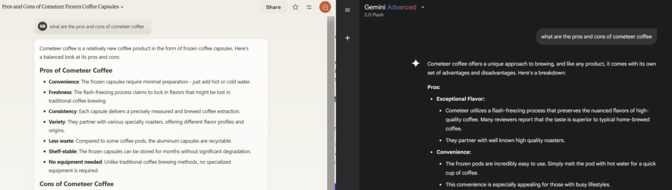
AI search has changed lead generation economics in three concrete ways:
AI traffic converts at multiples of traditional organic rates. According to Semrush research, the average AI search visitor is 4.4 times as valuable as the average traditional search visitor. The reason is intent quality: queries that produce AI citations tend to be more specific, more buying-stage, and more committed than the broad informational queries that drive most traditional organic traffic.
AI Overviews change the visibility math for traditional search. Click-through rates on top organic results have dropped substantially in many categories since AI Overviews launched. Programs that previously produced steady leads from position-1 rankings now need to either earn the AI Overview citation (the new position-1) or compensate with deeper content libraries that capture long-tail and conversion-stage queries.
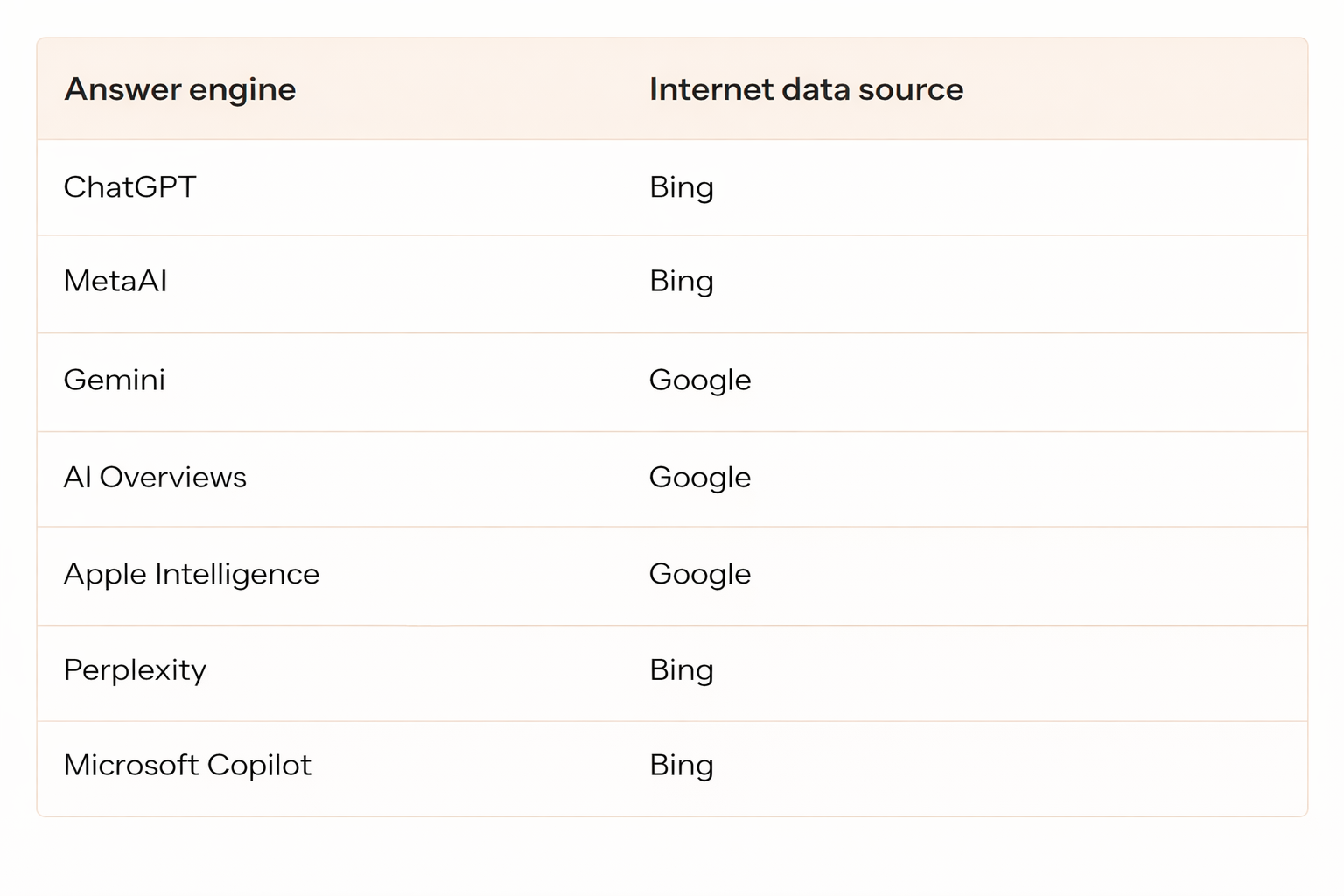
Citation in AI engines functions as qualified inbound. When ChatGPT recommends your business to a researcher asking “find me a B2B sales engagement platform that integrates with HubSpot,” the resulting visitor arrives with substantially more context and intent than a typical organic visitor. These visits convert at higher rates because the AI engine has effectively pre-qualified the prospect. Building citation surface (definition-first content, schema markup, third-party review presence, original statistics) is the discipline that earns these visits.
For the complete optimization playbook, see our AI and SEO guide, AEO guide, and GEO guide.
Lead Quality vs. Lead Quantity Framework
More leads is not always the right goal. A program producing 100 leads per month at 5% sales-acceptance rate produces 5 sales-accepted leads. A program producing 30 leads per month at 30% sales-acceptance rate produces 9. The second program is winning despite the lower lead count.
The framework that separates high-quality from low-quality lead programs:
Quality signals to track: sales-accepted lead rate, opportunity creation rate from leads, average deal size by lead source, customer lifetime value by lead source, sales cycle length by lead source.
When to optimize for quantity: early-stage programs without enough volume to identify quality patterns, B2C programs where individual lead value is low and aggregation matters, content-focused programs building toward future authority.
When to optimize for quality: mature programs with adequate baseline volume, B2B programs with high deal values, programs where sales capacity is the bottleneck rather than lead generation.
The shift point. Most programs should focus on quantity for the first 6 to 12 months (until they have enough lead volume to identify quality patterns), then shift to quality-weighted optimization. The shift point varies by business model: ecommerce typically shifts earlier; enterprise B2B may stay quantity-focused for 18 months before quality-weighted reporting becomes meaningful.
For B2B-specific lead frameworks, see our SEO for B2B page. For B2C-specific frameworks, see our SEO for B2C page.
8 Common Lead Generation Mistakes
These are the issues we find most often when auditing lead generation programs.
- Treating traffic and leads as the same metric. They’re not. Traffic without conversion is interesting; conversion without sufficient traffic is also limited; both matter independently.
- Focusing only on top-of-funnel content. Educational blog content drives traffic without leads. Programs need a healthy ratio of bottom-of-funnel commercial content too.
- One conversion mechanism for all visitors. Different visitors have different commitment levels. A single high-friction “contact us” form misses everyone not ready for that level of commitment.
- No A/B testing on conversion paths. CTA wording, form length, button colors, headline phrasing all affect conversion rates substantially. Programs that don’t test miss easy improvements.
- Ignoring mobile conversion experience. Mobile traffic now exceeds desktop in most B2C and increasingly in B2B. Forms and conversion paths optimized only for desktop convert poorly on mobile.
- Long sales cycle attribution failures. B2B programs that measure leads at the wrong stage (e.g., MQLs only) miss the SEO contribution to deals that close 6 to 12 months later. Multi-touch attribution is required.
- Treating SEO and CRO as separate disciplines. They’re complementary. SEO without CRO produces traffic without leads; CRO without SEO produces high-converting pages with no traffic. Programs need both.
- Abandoning the program before compounding kicks in. SEO lead generation produces meaningful results between months 4 and 12, with full compounding through year 2 and 3. Programs that quit at month 4 because results “look slow” never see the curve.
How to Choose a Lead Generation SEO Partner
If you decide not to run SEO lead generation in-house, the partner you choose matters as much as the work itself. Look for:
Lead generation focus, not just rankings. A partner that reports only traffic and ranking improvements may be missing the actual business outcome. Ask for case studies that include lead volume, lead quality metrics, and revenue attribution alongside traffic data.
CRO capability or coordination. SEO and CRO work together. Partners who handle both (or coordinate cleanly with a CRO partner) produce better outcomes than partners doing only SEO with no influence on conversion paths. Ask about specific CRO experience and tools.
Industry-specific experience. Lead generation tactics differ substantially across business models. A partner experienced in your category (B2B SaaS, ecommerce, local services, professional services) will understand the conversion path, lead qualification, and sales cycle dynamics specific to your business.
AI search awareness. In 2026, any lead generation SEO partner without a clear approach to AI search visibility (ChatGPT, Gemini, Perplexity citations, AI Overview optimization) is working from an outdated playbook. Ask specifically how they monitor AI citations and what tools they use.
Realistic timelines. Lead generation through SEO produces early lift between months 3 and 6 and meaningful pipeline contribution between months 6 and 12. Partners promising first-month lead transformations are either selling paid ads or misrepresenting timelines.
Reasonable pricing. Lead generation SEO programs typically range from $2,500 to $7,500 per month for SMB-focused programs, $7,500 to $25,000 per month for established mid-market programs with multi-channel coordination, and $25,000 to $75,000 or more per month for enterprise programs with complex sales cycles, multiple personas, or international scope. See our SEO services pricing page for the full breakdown, or explore our managed SEO services for a custom engagement quote.
Frequently Asked Questions
How do I drive more leads from my website?
More leads come from combining six factors: targeting high-intent keywords, improving landing page conversions, capturing AI-search traffic, strengthening internal links to commercial pages, using lead magnets, and building local SEO visibility. Most struggling websites are missing several of these elements, not just one.
Why isn’t my website driving leads even though it gets traffic?
Common causes include targeting informational rather than commercial keywords, weak CTAs, long forms, poor mobile experience, missing trust signals, weak internal linking, limited conversion options, and low AI search visibility. Identifying the biggest bottlenecks usually delivers the fastest gains.
How long does SEO take to drive leads?
Most websites see early lead activity within 3 to 6 months and meaningful lead generation within 6 to 12 months. SEO is a compounding channel, with the largest returns typically appearing after the first year of consistent investment.
What are the best keywords for lead generation?
The highest-converting keywords usually show clear buying intent, including transactional (“hire,” “buy”), comparison (“X vs Y”), pricing, review, alternative, and location-based searches. Lower-volume commercial keywords often generate more leads than high-volume informational terms.
How do I improve my conversion rate from organic traffic?
Focus on conversion rate optimization (CRO): stronger CTAs, shorter forms, trust signals, reviews, faster mobile performance, A/B testing, lead magnets, and low-friction conversion opportunities. Improving existing high-traffic pages often delivers faster results than creating new content.
Should I use lead magnets or just contact forms?
Use both. Contact forms capture sales-ready prospects, while lead magnets capture visitors still researching. Combining high-intent and low-friction conversions typically generates far more leads than relying on a single conversion path.
How does AI search affect lead generation?
AI search is changing lead generation by sending higher-intent visitors, reducing clicks on some traditional rankings, and creating new visibility opportunities through AI citations. Brands that optimize for AI visibility can capture qualified traffic beyond traditional search results.
Is SEO worth it for lead generation if my budget is small?
For most businesses, yes. A focused SEO strategy targeting high-intent keywords can generate qualified leads at a lower long-term cost than paid acquisition. Even modest budgets can produce meaningful results when concentrated on revenue-driving opportunities.
Grow Your Visibility Beyond Google
Capture leads and traffic from emerging search platforms like ChatGPT, Perplexity, and Google AI.
Writers

Stephen Aloy
Lead SEO Consultant, WebFX
Stephen Aloy
Lead SEO Consultant, WebFX