Is SEO Worth It in 2026? A Data-Driven Decision Framework
For most businesses, yes. But not unconditionally.
SEO remains one of the highest-ROI customer acquisition channels available. Organic search drives more than half of all website traffic globally, converts better than most paid channels, and compounds in value over time in a way that ads simply cannot match.
But SEO is not the right primary investment for every business. Companies that need immediate sales, have limited budgets, or operate in markets with little search demand may see stronger returns elsewhere.
So the real question is not “Is SEO worth it?” It is whether SEO is worth it for your specific business, timeline, and budget. This guide gives you a practical framework to answer that honestly.





Table Of Content
Future-Proof Your SEO Strategy with OmniSEO®
Goodbye search engine optimization, hello search everywhere optimization.

The Direct Answer: Is SEO Worth It in 2026?
Yes, SEO is still worth it in 2026 for most businesses where search influences purchasing decisions.
This includes:
- Local service businesses
- E-commerce stores
- B2B service providers
- SaaS companies
- Professional services firms
- Healthcare organizations
- Legal practices
- Financial services companies
- Trust-driven brands
For these business models, SEO often delivers some of the strongest long-term acquisition economics available.
The reasons are straightforward:
- Search users already have intent.
- Organic traffic typically converts better than most paid channels.
- SEO assets continue producing value long after publication.
- Customer acquisition costs often decline over time.
- AI search platforms increasingly reward established authority.
For many companies, SEO becomes one of the few marketing channels that improves efficiency as it matures.
That said, SEO is not always the best first investment.
SEO may not be the right primary channel when:
- Immediate revenue is required
- Budget constraints prevent long-term investment
- Search demand is extremely limited
- Direct sales drive most revenue
- Product lifecycles are short
- Campaigns depend on temporary trends
In these situations, paid media, outbound sales, partnerships, or referral strategies may produce faster results.
The strategic decision is rarely whether you should invest in SEO at all.
Instead, the real question is:
How much should you invest in SEO, and how does that investment compare to alternative growth channels?
Understanding that distinction leads to better decisions than treating SEO as either universally essential or completely unnecessary.
The Data Behind SEO's Value
The value of SEO comes from a combination of traffic, conversion rates, acquisition costs, and long-term compounding effects.
Organic Search Remains the Largest Traffic Source
Organic search continues to account for roughly 53% of total website traffic.
For most businesses, no other single channel generates comparable discovery volume.
Companies without a meaningful SEO presence often miss the largest source of potential visitors available online.
SEO Traffic Converts at Higher Rates
One reason SEO remains so valuable is intent.
People searching for solutions are already looking for information, products, or services. That behavior places them much closer to a purchasing decision than users who encounter interruptive advertising.
As a result, organic search frequently produces higher conversion rates than:
- Display advertising
- Social media advertising
- Cold outreach
- Most paid traffic sources
This conversion advantage compounds over time as rankings improve.
Cost Per Lead Improves Over Time
SEO requires upfront investment.
Unlike paid advertising, where traffic begins immediately, SEO often requires several months before meaningful returns appear.
However, once rankings mature, acquisition costs frequently become significantly lower than paid alternatives.
Many businesses reach the point where SEO generates leads at a fraction of the cost of paid search campaigns.
SEO Produces Compounding Returns
This is the characteristic that separates SEO from most marketing channels.
A paid advertisement stops generating traffic the moment spending stops.
A well-optimized page can continue generating traffic, leads, and revenue for years.
As content accumulates, authority grows and rankings improve, creating a compounding effect that few acquisition channels can match.
Brand Demand Increases Over Time
Strong SEO programs do more than rank pages.
They increase brand visibility.
Over time, businesses often see growing branded search demand as prospects become familiar with the company through informational content, category leadership, and repeated exposure.
Branded searches typically convert at much higher rates than non-branded searches.
AI Search Is Expanding SEO’s Reach
Modern SEO extends beyond Google.
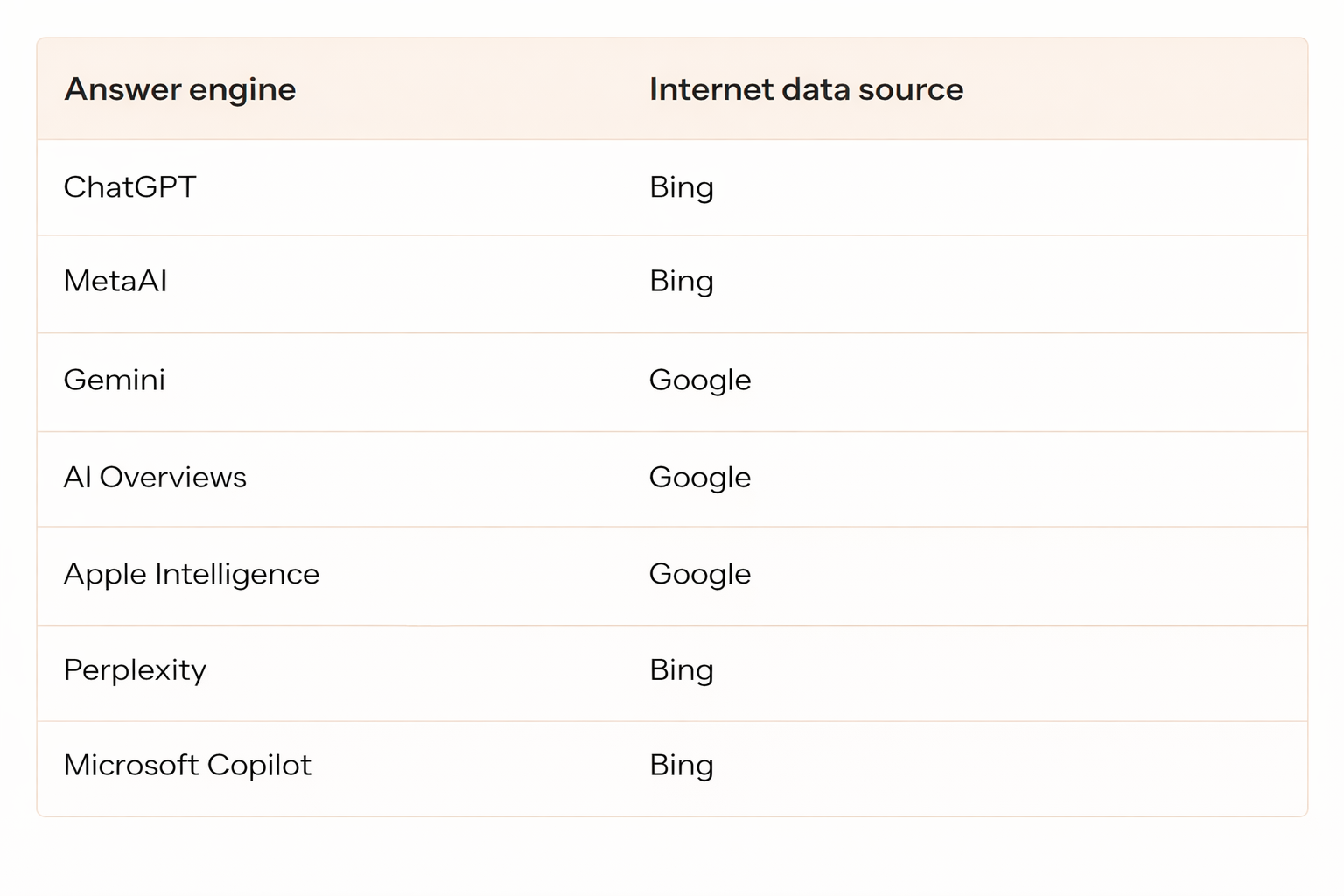
AI search platforms, including ChatGPT, Gemini, Perplexity, Claude, Microsoft Copilot, Grok, and Google’s AI Overviews, now influence how people discover businesses and evaluate solutions.
Companies that invest in SEO today are often building visibility across both traditional search engines and AI-powered discovery platforms.
This additional distribution layer strengthens the long-term value of SEO investments.
Comparing SEO to Other Channels
Compared to other acquisition channels:
Paid Search
- Faster results
- Higher ongoing costs
- Less compounding value
Social Media Advertising
- Lower intent traffic
- Generally lower conversion rates
- Stronger for awareness than demand capture
Email Marketing
- Excellent ROI
- Requires an audience first
- SEO is often one of the best audience-building channels
Content Marketing Without SEO
- Creates assets
- Often lacks consistent distribution
Partnerships
- Valuable but difficult to scale
Direct Sales
- Effective in some markets
- Resource-intensive
- Less scalable in many consumer categories
For most businesses with meaningful search demand, the economics still favor SEO over a multi-year horizon.
When SEO Is Worth It: The 8 Highest-Fit Business Models
Not every business benefits equally from SEO. The following categories consistently produce the strongest returns.1. Local Service Businesses
If someone asks, “Is SEO worth it for a small business?” This is often the easiest category to answer. For local service providers, the answer is usually yes. Examples include:- HVAC companies
- Plumbers
- Electricians
- Roofers
- Dentists
- Lawyers
- Healthcare practices
- Real estate professionals
- Home service providers
- Emergency plumber near me
- Dentist in [city]
- Roofing contractor nearby
- Google Business Profile visibility
- Review accumulation
- Local citations
- Geographic relevance
2. E-Commerce Businesses
E-commerce remains one of the strongest SEO opportunities available. Product searches naturally indicate buying intent, making attribution relatively straightforward. Successful e-commerce SEO programs typically include:- Category pages
- Product pages
- Buying guides
- Product comparisons
- Informational content
3. B2B Services and SaaS
B2B buyers conduct extensive research before making decisions. That behavior aligns exceptionally well with SEO. Decision-makers frequently search for:- Solutions
- Comparisons
- Reviews
- Pricing information
- Vendor evaluations
4. Professional Services
Professional services businesses are another strong fit for SEO. This includes:- Law firms
- Healthcare providers
- Financial advisors
- Consultants
- Accountants
When SEO May Not Be Worth It: The 6 Weakest-Fit Situations
A complete answer to “is SEO worth it?” requires acknowledging situations where it may not be the best primary investment. While SEO delivers excellent long-term returns for many businesses, some scenarios favor alternative customer acquisition channels.1. Businesses That Need Immediate Sales
SEO is a long-term growth channel. Most campaigns require six to twelve months before meaningful returns appear and often take longer in competitive industries. If your business needs revenue within the next 30 to 90 days, paid search and paid social usually make more sense as primary channels. That doesn’t mean you should ignore SEO. It simply means SEO should run alongside faster channels rather than replacing them.2. Businesses Without Budget for Long-Term Investment
SEO rewards consistency. Companies that stop investing before the compounding phase rarely see the full benefits. Typical monthly investment levels include:- Small businesses: $500–$2,000
- Mid-market companies: $3,500–$8,000
- Enterprise organizations: $8,000+
3. Markets With Minimal Search Demand
SEO depends on people searching. Some markets simply don’t generate enough search volume to justify significant investment. Examples include:- Extremely niche B2B industries
- Emerging categories with little market awareness
- Products customers rarely search for online
4. Relationship-Driven Business Models
Certain businesses grow primarily through referrals, networking, and personal relationships. Examples include:- Executive consulting
- Referral-based advisory firms
- Some enterprise service providers
- Industries built around trade-show networking
5. Very Short Product or Campaign Lifecycles
SEO compounds over time. Businesses operating on short timelines often don’t remain active long enough to benefit from that compounding effect. Examples include:- Limited-time campaigns
- Temporary product launches
- Seasonal projects
- Trend-dependent products
6. Categories Heavily Impacted by AI Overviews
The newest challenge in search is AI answer substitution. Some informational queries now receive detailed answers directly inside AI Overviews and AI search engines, reducing clicks to traditional organic listings. Examples include:- Basic definitions
- Simple informational questions
- Certain medical and educational queries
SEO vs. Other Customer Acquisition Channels
One of the best ways to answer “should I invest in SEO?” is to compare it against alternative growth channels.SEO vs. Paid Search
SEO advantages- Lower long-term acquisition costs
- Compounding returns
- Stronger brand authority
- Traffic continues after investment slows
- Immediate visibility
- Faster testing
- Predictable scaling
SEO vs. Paid Social
SEO advantages- Higher-intent traffic
- Better conversion rates
- Stronger fit for researched purchases
- Awareness generation
- Product discovery
- Faster campaign launches
SEO vs. Content Marketing Alone
Publishing content without SEO often results in limited distribution. SEO ensures content aligns with actual search demand and remains discoverable over time. The strongest content strategies combine both disciplines.SEO vs. Email Marketing
Email marketing often delivers exceptional ROI. However, email needs an audience first. SEO helps attract that audience. In most cases, SEO generates subscribers while email converts and nurtures them.SEO vs. Direct Sales
Direct sales work exceptionally well for high-ticket and enterprise offerings. SEO provides scalability. A well-ranking website generates opportunities around the clock without increasing headcount. Many businesses achieve the strongest results by combining both approaches.SEO vs. Partnerships
Partnerships provide access to established audiences and can create rapid growth. SEO creates owned visibility that isn’t dependent on third parties. Most mature companies benefit from both.The Honest SEO Investment Decision Framework
If you’re still asking, “Is SEO worth it for my business?” use the framework below.Step 1: Is There Search Demand?
Start with keyword research. If potential customers actively search for solutions in your category, SEO becomes a viable channel. If search demand is extremely limited, other acquisition strategies may perform better.Step 2: Can You Sustain Investment?
SEO requires consistency. Can you maintain investment for at least six to twelve months without expecting immediate ROI? If not, paid channels may be a better starting point.Step 3: Does Your Timeline Match SEO?
Businesses with multi-year growth horizons benefit most from SEO. Businesses operating on short-term campaigns often don’t.Step 4: Do Customers Research Before Buying?
If customers compare options online before making decisions, SEO is usually valuable. If purchasing decisions happen almost entirely through referrals or direct relationships, SEO may play a supporting role rather than a primary role.Step 5: What Is Customer Lifetime Value?
Higher customer lifetime value supports larger acquisition investments. Businesses with strong LTV often see excellent returns from SEO because each new customer generates substantial long-term revenue.Step 6: How Competitive Is the Market?
Competition affects both cost and timeline. Highly competitive industries require larger investments and greater patience. Less competitive markets often generate returns much faster.Step 7: Are You Considering AI Search Visibility?
Modern SEO includes more than Google rankings. Businesses should evaluate visibility across:- ChatGPT
- Gemini
- Perplexity
- Claude
- Microsoft Copilot
- Google AI Overviews
Final Assessment
If you answered “yes” to all seven questions, SEO is almost certainly worth the investment. At that point, the focus shifts from whether to invest to how much to invest and how to execute effectively.Frequently Asked Questions
Is SEO worth it in 2026?
Yes. For most businesses where online discovery influences purchasing decisions, SEO remains one of the highest-ROI marketing channels available. Organic search continues to drive significant traffic, leads, and revenue while providing long-term compounding returns that paid channels cannot match.Is SEO worth it for small business owners?
In most cases, yes. Local service businesses, healthcare providers, law firms, home service companies, and local B2B providers often see strong returns because local searches carry high commercial intent. Many small businesses achieve positive ROI within four to nine months and significantly larger returns over multiple years.Is SEO dead because of AI?
No. SEO has evolved rather than disappeared. Visibility now extends across Google, AI search engines, AI Overviews, YouTube, Reddit, TikTok, Amazon, and platform-specific search ecosystems. The opportunity remains substantial, but optimization now includes both traditional search and AI discovery systems.How long does SEO take before it’s worth it?
Most businesses begin seeing meaningful traction within six to twelve months. Local businesses may see results faster, while B2B, SaaS, and highly competitive industries often require twelve to eighteen months. The strongest returns typically occur during years two and three.What’s better: SEO or paid ads?
Neither is universally better. Paid ads deliver immediate results. SEO delivers long-term compounding growth. Most successful companies use both: paid advertising for short-term demand and SEO for sustainable growth.Can I do SEO myself?
Yes, particularly if you’re a small business operating in a less competitive market. However, as competition increases, many businesses reach a point where professional support becomes more cost-effective than managing SEO internally.Is SEO worth it in highly competitive industries?
Yes, but expectations must adjust. Competitive industries require:- Larger budgets
- Longer timelines
- More sophisticated content strategies
- Strong authority building
- AI search optimization
What’s the minimum SEO budget that makes sense?
For most small businesses, meaningful SEO usually starts around $500–$1,500 per month. Competitive markets often require $2,000–$5,000+ monthly. The key is consistency. Small but sustained investment generally outperforms larger short-term campaigns that stop before compounding begins.Your Next Steps
You now have a clear framework for deciding whether SEO is worth it for your business. The next step is simple: Evaluate your search demand, budget, timeline, customer behavior, and competitive landscape honestly. If your business fits the strong-fit categories outlined in this guide, SEO can become one of the most valuable long-term growth assets you build. If it doesn’t, alternative channels may generate better returns right now—and that’s equally valuable to know. The goal isn’t investing in SEO because everyone says you should. The goal is investing in the channel that creates the strongest economics for your specific business.
Grow Your Visibility Beyond Google
Capture leads and traffic from emerging search platforms like ChatGPT, Perplexity, and Google AI.

Writers

Stephen Aloy
Lead SEO Consultant, WebFX
Stephen Aloy
Lead SEO Consultant, WebFX