SEO for Gemini: Complete Guide to Rankings & AI Citations
SEO for Gemini is the discipline of optimizing content, schema markup, and brand entity signals so Google’s Gemini AI cites or recommends your brand across its three surfaces: AI Overviews in standard search results, AI Mode for deep-research queries, and Gemini Chat at gemini.google.com.
Unlike SEO for ChatGPT or Perplexity, SEO for Gemini is tied directly to Google’s existing index, Knowledge Graph, and core ranking systems. Traditional Google SEO foundations matter more here than on any other major AI engine.
Gemini has approximately 140 million users and is growing fast within Google’s broader ecosystem. Pages ranking in the top 10 organic results are roughly 3x more likely to be cited than pages beyond position 20. Pages updated within the last 30 days are cited at a 76.4% rate, while stale content drops off sharply.
This guide covers the 6 Gemini optimization pillars, the Schema Priority Stack tuned for Knowledge Graph integration, and how to maintain consistent visibility across an AI Mode that shows only 9.2% citation overlap across repeated tests of the same query.
Table Of Content
Future-Proof Your SEO Strategy with OmniSEO®
Goodbye search engine optimization, hello search everywhere optimization.

Writers

Stephen Aloy
Lead SEO Consultant, WebFX
Stephen Aloy
Lead SEO Consultant, WebFX
What Is SEO for Gemini?
SEO for Gemini is the practice of optimizing content, brand presence, and technical infrastructure so Google Gemini retrieves, cites, or recommends your brand across AI Overviews, AI Mode, and Gemini Chat.
Unlike other AI engines, Gemini pulls directly from Google’s existing index and Knowledge Graph rather than maintaining a separate retrieval system. Classic Google SEO remains the operational foundation, with AI-specific tactics layered on top: comprehensive schema markup, entity optimization, topic cluster architecture, and freshness maintenance within the 30-day citation window.
Four things make Gemini distinct. There is no separate Gemini crawler, so traditional Google rankings directly determine citation eligibility. AI Mode’s query fan-out issues hundreds of searches per query, which rewards topic-cluster depth more than any other major AI engine. Knowledge Graph integration makes Organization schema and entity disambiguation especially impactful.
And Gemini’s presence across Gmail, Docs, Android, and Workspace gives it distribution points no standalone AI engine can match. Brand-owned domains are cited approximately 52% of the time, higher than any other major AI engine.
Why SEO for Gemini Matters in 2026
SEO for Gemini matters because Gemini powers AI Overviews that now appear in approximately 18.76% of US Google searches, with click-through rates on top organic positions dropping 34.5% when AI Overviews appear. Gemini also extends Google’s reach into AI Mode and standalone Gemini Chat, while Google ecosystem integration gives Gemini citation patterns disproportionate influence across Gmail, Docs, Android, and Workspace experiences that other AI engines cannot replicate.
Three reasons SEO for Gemini has become operationally required:
Gemini integration with Google’s ecosystem creates compounding visibility
Brands cited in Gemini responses appear not just in standalone AI search, but across the broader Google product ecosystem: AI Overviews in Search, AI-powered features in Gmail and Docs, Android Assistant interactions, and Workspace AI features. A single citation pattern in Gemini can reinforce brand visibility across multiple touchpoints, producing visibility lift that standalone AI engines cannot match for brands whose audiences heavily use Google products.
Traditional Google SEO translates directly to Gemini visibility
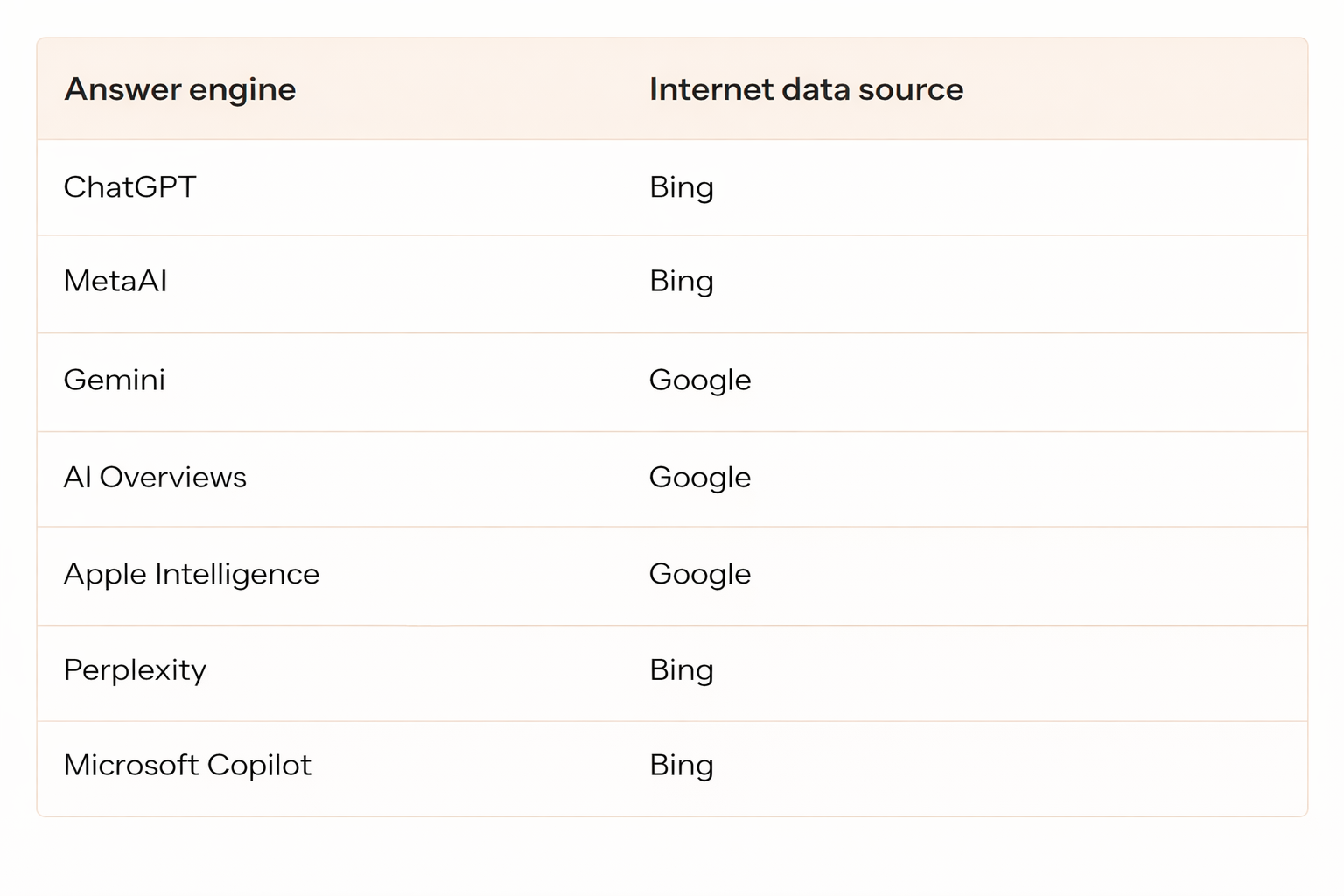
Brands already investing in Google SEO (technical foundations, content quality, authority signals, schema markup) build Gemini visibility as a byproduct because Gemini uses the same underlying ranking systems. The translation is far more direct than for ChatGPT (which routes through Bing) or Perplexity (which uses its own retrieval index). For brands with mature Google SEO programs, Gemini optimization is usually about layering AI-specific enhancements onto existing foundations rather than rebuilding from scratch.
Query fan-out creates first-mover citation advantages
AI Mode’s query-fan-out mechanism issues hundreds of searches per user query to build a broader citation pool than traditional top-10 results. Brands with strong topic-cluster depth (pillar content plus interconnected supporting content) can appear across multiple related searches inside a single AI Mode response, producing compounding visibility that isolated page optimization cannot achieve. Brands establishing topic authority early create citation patterns competitors may need years of content investment to challenge.
For commercial AI SEO services with Gemini-specific optimization support, see our AI SEO services page.
How Gemini Actually Selects Sources
Gemini source selection operates through Google’s existing infrastructure with AI synthesis layered on top. Understanding the three-stage process is operationally critical.
Stage 1: Retrieval Through Google’s Existing Index
Gemini queries Google’s existing search index using ranking signals brands already optimize for: domain authority, content relevance, technical accessibility, schema markup, freshness, and Knowledge Graph entity recognition. The retrieval stage relies on Google’s core systems (RankBrain, BERT, PageRank, Helpful Content System), not on a separate Gemini-specific index.
This is why traditional Google SEO translates so directly into Gemini visibility.
Stage 2: Query Fan-Out and Citation Pool Expansion
For AI Mode specifically (and to a lesser extent AI Overviews), Gemini uses query fan-out: multiple search variants and related searches beyond the user’s exact phrasing. This produces a much broader citation pool than the standard top-10 organic results.
Research shows AI Mode citations have only approximately 9.2% overlap across three tests of the same query, indicating the system pulls from a much broader result set than fixed rankings alone.
Topic-cluster depth becomes especially valuable here. Brands with interconnected coverage across related subtopics can appear repeatedly across fan-out searches within the same AI-generated response.
Stage 3: Synthesis with Knowledge Graph Integration
Gemini synthesizes responses by combining retrieved content with Knowledge Graph entity information. The synthesis layer rewards content with strong entity-recognition signals, including:
- Organization schema
- Consistent brand naming
- Knowledge Panel completeness
- Wikidata structure
- Author and entity consistency
Pages with strong schema markup show approximately 58% higher visibility in AI snippets, with the effect especially pronounced in Gemini due to Knowledge Graph integration.
The operational implication is clear: SEO for Gemini requires optimization across all three stages:
- Traditional Google SEO for retrieval
- Topic-cluster architecture for query fan-out
- Knowledge Graph optimization for synthesis-stage citation
Brands optimizing only for rankings miss the fan-out opportunity. Brands skipping schema and entity work miss the synthesis-stage recognition that determines which sources Gemini actually cites.
Gemini Citation Patterns: What Actually Gets Cited
Research on Gemini citation behavior reveals several operationally important patterns.
Top-10 Google rankings are 3x more likely to be cited
Websites ranking in Google’s top 10 organic results are approximately 3x more likely to appear in Gemini responses and AI Overviews than websites ranking beyond position 20.
The pattern reflects Gemini’s direct dependency on Google’s ranking systems: strong organic rankings act as the eligibility layer for AI citation.
Brands without top-10 rankings for priority queries face a structural disadvantage in Gemini visibility regardless of additional AI optimization work.
Pages updated within 30 days achieve a 76.4% citation rate
Passionfruit research found that AI platforms (including Gemini) cite pages updated within the last 30 days at approximately a 76.4% rate, while pages stale for 6+ months on fast-changing topics experience significant citation declines.
Erlin analysis of 500+ brands found that brands updating core content monthly achieved approximately 23% higher AI coverage than brands with stale content.
Content freshness functions as a direct Gemini citation signal rather than a soft preference.
Approximately 52% of Gemini citations go to brand-owned domains
Gemini cites brand-owned domains at approximately 52%, substantially higher than ChatGPT and dramatically higher than Perplexity’s Reddit-heavy citation behavior.
The implication: Gemini rewards first-party content investment more heavily than third-party citation-surface building.
Brands relying primarily on third-party mentions while maintaining thin owned-content ecosystems underperform in Gemini specifically.
Schema markup increases AI visibility by approximately 58%
Pages with strong schema implementation show substantially higher visibility across AI Overviews and AI Mode.
For Gemini specifically, schema impact is amplified by Knowledge Graph integration:
- Organization schema strengthens entity recognition
- FAQPage schema aligns with conversational search patterns
- Product schema improves commercial extraction
- Article schema strengthens attribution and freshness signals
99% of AI Mode citations appear in top-20 organic results
Research on Google’s AI Mode found that approximately 99% of cited URLs already appear within the top 20 organic search results for related queries.
The top-20 threshold matters because query fan-out expands visibility opportunities beyond traditional page-one rankings. Pages ranking in positions 11-20 can still capture meaningful AI Mode visibility.
AI Mode shows only 9.2% overlap across repeated tests
Erlin testing found that AI Mode responses showed only approximately 9.2% citation overlap across three separate runs of the same query.
That volatility makes single-query testing unreliable. Consistent visibility across repeated tests is the more meaningful success metric.
The 6 Gemini Optimization Pillars
These six pillars, calibrated for Gemini’s Google-integrated architecture and three-surface synthesis system, form the operational framework for Gemini SEO.
1. Google Foundation SEO
Gemini’s dependency on Google’s ranking systems makes traditional SEO the operational foundation. Brands with strong Google SEO programs often gain Gemini visibility naturally; brands with weak foundations cannot compensate through Gemini-specific tactics alone.
Practical implementation includes:
- Technical SEO foundations (crawlability, Core Web Vitals, HTTPS, mobile optimization)
- Original, substantive content aligned with Google’s Helpful Content System
- Authority building through backlinks and brand mentions
- On-page optimization (title tags, meta descriptions, internal linking)
- Topic-cluster architecture
- Ongoing competitive ranking work
The 3x citation advantage for top-10 rankings and 99% overlap with top-20 results make traditional Google SEO the highest-leverage investment for Gemini visibility.
Our SEO basics, technical SEO, on-page SEO, and off-page SEO guides cover these foundational disciplines.
2. Schema and Structured Data
Gemini has the strongest schema dependency of any major AI engine because of its Knowledge Graph integration.
Pages with strong schema implementation show approximately 58% higher visibility in AI-generated results, with the impact amplified in Gemini because schema directly feeds entity recognition during synthesis.
Practical implementation includes:
- Organization schema as the foundational entity layer
- Product and Service schema for commercial pages
- Article schema with author attribution and dateModified
- FAQPage schema for conversational extraction
- HowTo schema for instructional content
- Person schema for authors and experts
- BreadcrumbList schema for hierarchy clarity
- Category-specific schema (Recipe, Event, JobPosting, MedicalCondition, FinancialProduct, etc.)
The Gemini Schema Priority Stack (covered later in this guide) ranks schema types by operational impact.
3. Knowledge Graph and Entity Optimization
Knowledge Graph integration is Gemini’s defining differentiator among major AI engines.
Strong entity recognition creates compounding visibility because the entity layer feeds AI Overviews, AI Mode, Gemini Chat, Knowledge Panels, rich results, and broader Google ecosystem features simultaneously.
Practical implementation includes:
- Wikipedia and Wikidata entity work where notability standards permit
- Knowledge Panel optimization
- Consistent brand identity across all properties
- Organization schema with complete business attributes
- Structured author profiles linked via Person schema
- sameAs links to professional profiles and official properties
- Entity disambiguation work for similarly named brands
Brands with strong Knowledge Graph entities get cited more consistently because entity signals reinforce retrieval, fan-out, and synthesis simultaneously.
4. Brand-Owned Content Investment
Gemini’s approximately 52% brand-owned citation rate is the highest among major AI engines.
The platform strongly favors authoritative first-party content over third-party aggregator mentions.
Practical implementation includes:
- Deep first-party content covering the category authoritatively
- Proprietary research and original data
- Brand-specific frameworks and methodologies
- Expert-led thought leadership
- Transparent company information and leadership profiles
- Ongoing editorial investment in owned properties
Brands shifting from third-party-dependent visibility strategies toward stronger owned-content ecosystems typically begin seeing Gemini visibility gains within 3 to 6 months as authority signals mature.
5. Topic Cluster Architecture
AI Mode’s query-fan-out mechanism rewards interconnected topic depth rather than isolated keyword targeting.
Topic-cluster architecture helps brands appear across multiple related fan-out searches inside a single AI response.
Practical implementation includes:
- Pillar pages covering broad themes comprehensively
- Supporting subtopic pages targeting specific questions and variations
- Strong internal-linking structures
- Semantic entity coverage within clusters
- Continuous expansion into emerging adjacent queries
- Regular topic-gap analysis against competitors
Single-page optimization underperforms in Gemini’s fan-out environment. Topic depth is the structural advantage.
Our SEO content guide covers topic-cluster strategy in depth.
6. Content Freshness and Provenance
The 76.4% citation rate for recently updated pages makes freshness a structural Gemini ranking signal.
Brands maintaining stale content beyond the 6-month threshold often experience steep citation declines regardless of domain authority.
Practical implementation includes:
- Visible “Last updated” timestamps
- Machine-readable dateModified schema
- Refresh cycles based on topic velocity
- Updated statistics and source citations
- Structured author attribution
- Changelog-style update notes
- Editorial maintenance processes as ongoing operations rather than one-time publishing
Brands updating core content monthly achieve approximately 23% higher AI visibility than brands allowing content to stagnate.
The Three Gemini Surfaces
Gemini operates across three distinct surfaces, each with different optimization implications. Most published guidance treats Gemini as a single system, but the operational reality requires understanding each surface independently.
Surface 1: AI Overviews (Google Search Results)
AI Overviews appear in approximately 18.76% of US Google searches as AI-generated summaries at the top of standard search results. Click-through rates on top organic positions decline by approximately 34.5% when AI Overviews appear, making AI Overview citation increasingly important for capturing search demand that traditional rankings once captured alone.
AI Overviews remain tightly coupled to traditional SEO. Approximately 73% of websites cited in AI Overviews also rank within the top 10 organic results for related queries.
Optimization priorities include:
- Strong organic rankings as the eligibility signal
- Comprehensive schema markup for synthesis-stage extraction
- Direct-answer content architecture with definition-first paragraphs Gemini can reliably extract
Google Search Console now provides AI Overview impressions as a separate reporting segment, giving brands direct visibility into AI Overview performance.
Surface 2: AI Mode (Deep Research)
AI Mode is Google’s deep-research experience that uses query fan-out to issue hundreds of searches per user question, gathering citations from a significantly broader pool than traditional top-10 organic rankings.
AI Mode citations show only approximately 9.2% overlap across three tests of the same query, indicating substantial citation volatility.
Approximately 99% of AI Mode citations appear within the top 20 organic results for related queries, which creates a broader visibility threshold than AI Overviews’ top-10 dependency.
Optimization priorities include:
- Topic-cluster architecture enabling multiple citations within a single AI Mode response
- Top-20 organic rankings across related subtopics
- Long-form, substantive content that supports synthesis across multiple sources
AI Mode rewards topical depth and breadth more heavily than isolated single-page optimization.
Surface 3: Gemini Chat (Standalone)
Gemini Chat is the standalone gemini.google.com chatbot integrated throughout Google Workspace and Android ecosystems.
Operationally, Gemini Chat behaves more like a conversational generative engine (closer to ChatGPT or Claude) than AI Overviews.
Citation patterns strongly favor:
- Knowledge Graph entity recognition
- Comprehensive schema implementation
- Brand-owned authoritative content
Gemini Chat is also where Knowledge Graph integration becomes most visible because the conversational format requires Gemini to resolve entities accurately across multi-turn interactions.
Strategic Implication
Brands applying identical optimization tactics across all three Gemini surfaces consistently underperform brands calibrating strategy for each environment individually.
- AI Overviews reward top-10 rankings plus extraction-friendly content
- AI Mode rewards topic-cluster depth plus top-20 topical coverage
- Gemini Chat rewards Knowledge Graph strength plus first-party authority
The six optimization pillars above are designed to support all three surfaces simultaneously while accounting for their distinct retrieval and synthesis behaviors.
The Schema Priority Stack for Gemini
Most SERP guidance around Gemini schema markup remains generic. In practice, schema priorities for Gemini differ significantly from priorities for AEO or Perplexity because of Gemini’s deep Knowledge Graph integration.
Tier 1 (Highest Impact for Gemini)
Organization Schema
The foundational entity signal feeding Google’s Knowledge Graph and reinforcing brand recognition across all Gemini surfaces.
Include comprehensive attributes:
- legalName
- foundingDate
- address
- contactPoint
- sameAs links to social profiles and Wikipedia
- logo
- founder information
- numberOfEmployees (where appropriate)
Organization schema produces the single highest-impact entity signal for Gemini because Knowledge Graph integration amplifies the effect throughout Google’s ecosystem.
Product Schema or Service Schema
Required for product and service page visibility in AI Overviews and Gemini Chat.
Include:
- Reviews and AggregateRating
- Availability
- Pricing
- Brand attribution
- Category-specific properties
Tier 2 (High Impact for Gemini)
Article Schema (or BlogPosting / NewsArticle)
Critical for content-page citation with proper:
- author attribution
- datePublished
- dateModified
- publisher signals
Article schema is operationally necessary for the 76.4% freshness correlation to register consistently.
FAQPage Schema
Strongly aligned with conversational query patterns in AI Overviews and Gemini Chat.
Deploy across:
- FAQ sections
- support documentation
- question-driven content
- definition-first informational pages
HowTo Schema
Essential for procedural and instructional content.
Gemini extracts structured step-by-step content reliably from HowTo-marked pages.
Tier 3 (Supporting Infrastructure)
Person Schema
Supports E-E-A-T at scale by connecting content to credentialed authors.
Include:
- Professional credentials
- sameAs links to LinkedIn, ORCID, professional associations, and other authority profiles
BreadcrumbList Schema
Supports hierarchy clarity and topic-cluster relationships.
Review and AggregateRating Schema
Especially valuable for commercial pages with meaningful review depth.
Tier 4 (Category-Specific Schema)
Deploy where relevant:
- Recipe
- Event
- JobPosting
- Course
- MedicalCondition
- MedicalProcedure
- FinancialProduct
- RealEstateAgent
- LocalBusiness
- AutoRepair
Implementation Priority
Most brands should:
- Deploy Tier 1 schema immediately sitewide
- Implement Tier 2 schema across all primary content pages
- Establish Tier 3 as foundational infrastructure
- Expand into Tier 4 where category-specific relevance exists
The Gemini Schema Priority Stack differs from the AEO stack because Gemini’s Knowledge Graph integration makes Organization schema substantially more influential.
For the AEO Schema Priority Stack, see our What Is AEO guide. For broader schema implementation guidance, see our technical SEO guide.
How to Measure Gemini Visibility
Gemini visibility measurement combines traditional SEO reporting with AI-specific monitoring infrastructure.
Primary Gemini Metrics
Google Search Console AI Overview Reporting
Search Console now reports AI Overview impressions separately inside performance reports.
This provides direct visibility into:
- Queries generating AI Overview citations
- AI-driven impressions
- AI-driven clicks
- Relative visibility trends
Manual Testing Across All Three Surfaces
Test priority prompts across:
- Google Search with AI Overviews enabled
- AI Mode
- Gemini Chat
Because AI Mode shows only approximately 9.2% overlap across repeated tests, meaningful measurement depends on consistent visibility across multiple runs rather than isolated snapshots.
Citation Frequency Tracking
Tools including AthenaHQ, Profound, Erlin, and Semrush AI Visibility Index automate prompt-level monitoring across large query sets.
Share of Voice Against Competitors
Track whether Gemini cites your brand or competitors across priority prompt categories and buying-intent searches.
Brand Sentiment and Accuracy
Monitor how Gemini describes your brand.
Questions to track include:
- Are descriptions accurate?
- Are there hallucinations?
- Is sentiment favorable?
- Are outdated claims surfacing?
Erlin research shows brands actively monitoring AI citations identify errors in approximately 14 days versus 67 days for brands without active monitoring.
Secondary Gemini Metrics
- Top-10 organic ranking coverage
- Top-20 ranking coverage for AI Mode fan-out visibility
- Knowledge Graph entity strength
- Schema deployment coverage
- Content freshness coverage
- Topic-cluster depth
- Brand-owned content growth
Measurement Cadence
Most mature Gemini programs track core metrics monthly with quarterly strategic review.
Update velocity differs by surface:
- AI Overviews update most frequently
- AI Mode updates moderately fast
- Gemini Chat updates more slowly alongside model and retrieval changes
Because citation overlap remains low, trend lines over multiple tests and longer windows are substantially more reliable than one-off snapshots.
For broader SEO measurement frameworks, see our SEO KPIs guide.
8 Gemini SEO Mistakes to Avoid
Treating Gemini as a Single Retrieval System
Gemini operates across three distinct surfaces with different optimization behaviors. Brands applying identical tactics across all three consistently underperform.
Ignoring Traditional Google SEO
The 3x citation advantage for top-10 rankings and 99% AI Mode overlap with top-20 organic results make Google SEO the highest-impact foundation for Gemini visibility.
Skipping Schema Markup
Gemini’s Knowledge Graph integration makes schema operationally critical. Properly marked pages achieve approximately 58% higher AI snippet visibility.
Over-Relying on Third-Party Citations
Gemini cites brand-owned domains approximately 52% of the time, more than any other major AI engine. Thin owned-content ecosystems consistently underperform.
Optimizing Single Pages Instead of Topic Clusters
AI Mode query fan-out rewards interconnected topical depth, not isolated keyword pages.
Allowing Content to Go Stale
The 76.4% citation rate for recently updated pages makes freshness a structural ranking signal. Brands without active refresh cadences steadily lose visibility.
Ignoring Knowledge Graph Optimization
Brands without entity optimization, Knowledge Panel work, or structured identity signals miss compounding visibility advantages throughout Google’s ecosystem.
Measuring Single-Test Results
AI Mode volatility makes one-off testing misleading. Consistent visibility across repeated runs is the meaningful signal.
Frequently Asked Questions
How is Gemini SEO different from ChatGPT or Perplexity SEO?
Gemini is tightly integrated with Google’s search index and Knowledge Graph, making traditional SEO signals substantially more influential.
Gemini also favors:
- Brand-owned domains
- Schema markup
- Knowledge Graph entities
- Fresh content
ChatGPT relies more heavily on Bing plus training-corpus patterns, while Perplexity strongly favors Reddit and discussion-style sources.
What are AI Overviews, AI Mode, and Gemini Chat?
Gemini operates across three surfaces:
- AI Overviews: AI-generated summaries in Google Search
- AI Mode: Deep-research experience using query fan-out
- Gemini Chat: Standalone conversational Gemini interface
Each surface has distinct citation behaviors and optimization priorities.
How does query fan-out work in AI Mode?
AI Mode expands beyond the literal user query by issuing hundreds of related searches covering adjacent topics, supporting concepts, and query variations.
This rewards brands with strong topic-cluster depth because multiple related pages can appear within a single AI-generated response.
How important is schema markup for Gemini?
Critical.
Gemini has the strongest schema dependency among major AI engines because schema feeds Knowledge Graph entity recognition.
Organization schema is especially impactful because it strengthens entity understanding across Google’s ecosystem.
How often should content be updated for Gemini visibility?
Fast-moving topics should typically be refreshed every 30 to 60 days.
Slower-moving categories generally require updates every 90 to 180 days, while evergreen content should still receive annual refreshes.
Pages stale beyond 6 months on dynamic topics frequently experience sharp citation declines.
How do I measure Gemini visibility?
Effective Gemini measurement combines:
- Search Console AI Overview reporting
- Manual prompt testing
- Citation-frequency tracking tools
- Share-of-voice analysis
- Knowledge Graph monitoring
- Freshness and schema audits
Because AI citation volatility is high, trend analysis over time matters more than isolated query tests.
Your Next Steps
You now have the complete operational framework for SEO for Gemini.
The fastest way to apply it is to:
- Audit your current Gemini visibility baseline
- Identify which of the six pillars is weakest
- Deploy the Gemini Schema Priority Stack
- Strengthen topic-cluster depth
- Implement freshness workflows
Grow Your Visibility Beyond Google
Capture leads and traffic from emerging search platforms like ChatGPT, Perplexity, and Google AI.