
What Is SEO ROI? Complete Guide to Measuring SEO Returns
SEO ROI measures the financial return generated by organic search relative to what you spend to produce it. The formula is straightforward:
SEO ROI = [(Revenue from SEO − SEO Cost) / SEO Cost] × 100
A healthy SEO program typically produces a 3x to 5x return over three years. Top-performing campaigns regularly exceed 600% ROI.
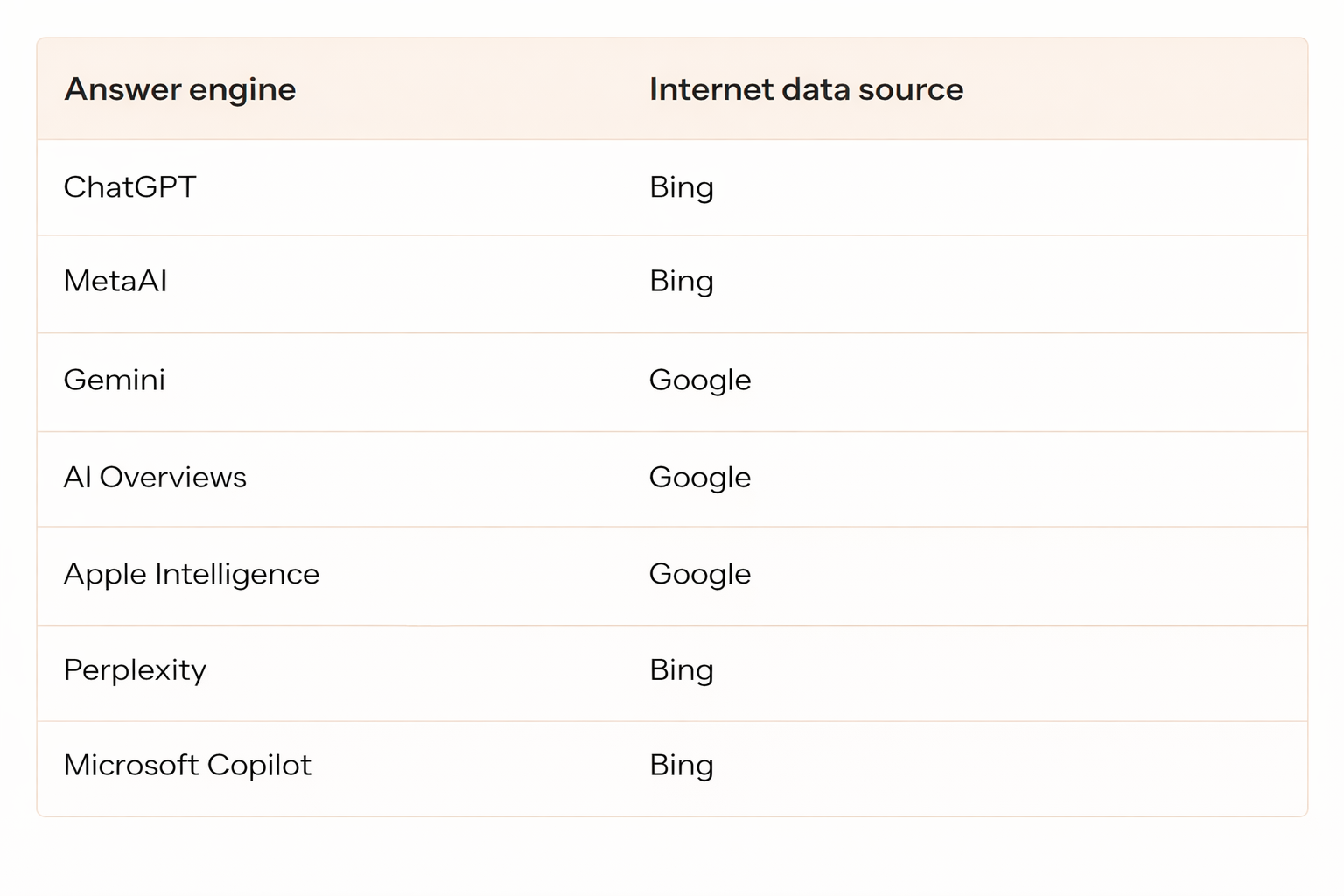
The formula is simple. The hard part is calculating both sides of it accurately. Most businesses undercount costs and underreport revenue, which means their real ROI is almost always different from what the dashboard shows. In 2026, AI search adds another layer, since citations in ChatGPT, Gemini, and Perplexity influence buying decisions that traditional analytics never capture.
This guide covers how to calculate SEO ROI correctly, which attribution models to use, and what benchmarks to measure against.





Table Of Content
Future-Proof Your SEO Strategy with OmniSEO®
Goodbye search engine optimization, hello search everywhere optimization.

The Direct Answer: What Is SEO's ROI?
SEO ROI is the financial return generated from organic search relative to the investment required to produce that return.
The standard calculation is:
SEO ROI = [(Revenue from SEO − SEO Cost) / SEO Cost] × 100
Using this formula:
- 100% SEO ROI means you generated $2 in revenue for every $1 invested.
- 300% SEO ROI means you generated $4 in revenue for every $1 invested.
- 500% SEO ROI means you generated $6 in revenue for every $1 invested.
- 1,000% SEO ROI means you generated $11 in revenue for every $1 invested.
Most healthy SEO programmes generate between 300% and 800% ROI over a three-year horizon.
Ecommerce businesses often achieve higher SEO returns because revenue attribution is more direct and transaction cycles are shorter. Service businesses and B2B organisations typically require longer measurement periods due to more complex buying journeys.
The actual SEO return on investment depends on several factors:
- Business model
- Customer lifetime value
- Conversion rates
- Competitive intensity
- Attribution methodology
- SEO programme quality
The strongest SEO programmes consistently outperform industry averages because they align content with intent, invest in technical excellence, and build authority over time.
Although the formula itself is simple, calculating SEO ROI accurately requires careful measurement.
Many businesses overlook hidden costs such as:
- Internal team time
- Technical development
- Design support
- SEO software
- Management overhead
Revenue attribution creates additional complexity because customers rarely convert after a single search interaction. A visitor may discover your business through organic search, return through direct traffic, engage with email marketing, and finally convert through branded search.
Without proper attribution, both SEO costs and SEO revenue can be significantly misrepresented.
The Core SEO ROI Formula
SEO ROI = [(Revenue from SEO − SEO Cost) / SEO Cost] × 100
Where:
Revenue from SEO
The total revenue attributed to organic search during the measurement period.
SEO Cost
The total investment required to generate that organic visibility.
× 100
Converts the result into a percentage.
SEO ROI Formula Example
Suppose your business invests $8,000 per month in SEO.
During the same month, organic search generates $32,000 in attributable revenue.
The calculation becomes:
ROI = [($32,000 − $8,000) / $8,000] × 100
SEO ROI = 300%
In practical terms, the business generated:
- $3 in profit for every $1 invested
- $4 in revenue for every $1 invested
This distinction matters because the standard SEO ROI formula focuses on profit generated above investment rather than total revenue alone.
Revenue-to-Cost Ratio Alternative
What Counts as SEO Cost?
Accurate SEO ROI calculation starts with accurate cost accounting. One of the most common mistakes businesses make is counting only agency retainers while ignoring the broader investments required to produce SEO results.
Direct SEO Costs
Most SEO programmes include:
- Agency or consultant fees
- In-house SEO salaries and benefits
- Content creation costs
- Content editing and strategy costs
- Technical SEO implementation
- Link acquisition and digital PR campaigns
- SEO software subscriptions
- Schema implementation
- AI-search optimisation tools
Examples of common tools include:
- Ahrefs
- Semrush
- SE Ranking
- Surfer
- AI visibility platforms
- Citation monitoring tools
Indirect SEO Costs
Indirect costs are frequently overlooked when calculating SEO return on investment.
These may include:
- Developer support
- Site-speed optimisation
- Technical implementations
- Design resources
- Infographic creation
- Editorial review processes
- Stakeholder approvals
- Project management
- Team training
- Infrastructure costs
- Internal reporting
These expenses may not appear inside an SEO budget but still contribute directly to SEO performance.
One-Time SEO Investments
Some SEO costs occur once but create value over several years.
Examples include:
- Website migrations
- CMS upgrades
- Pillar-content development
- Original research projects
- Technical platform improvements
- Comprehensive schema deployments
- AI-search infrastructure setup
Rather than assigning these costs entirely to a single month, many organisations amortise them across longer measurement periods.
The guiding principle is simple:
If a cost contributes to generating or maintaining organic search visibility, it should be included in your SEO ROI calculation.
Ignoring these expenses often inflates reported SEO ROI and produces unrealistic expectations.
What Counts as SEO Revenue?
Calculating revenue from SEO is more complicated than calculating cost. Modern buying journeys rarely happen through a single visit. Instead, users interact with multiple channels before becoming customers.Direct Organic Revenue
The easiest revenue to attribute includes:- Purchases completed during organic sessions
- Leads generated directly from organic traffic
- Subscriptions initiated from organic visits
- Transactions completed within a single search-driven journey
Influenced Revenue
Many conversions involve multiple touchpoints. Examples include:- Users who first discover your business through SEO and later return directly
- Visitors who convert after email nurturing
- Customers influenced by AI-engine citations
- Buyers who return through branded searches
- Retargeting campaigns that convert SEO-acquired visitors
Revenue Commonly Missed
Many businesses systematically undercount SEO revenue. Common blind spots include:- Long B2B buying cycles
- Customer expansion revenue
- Upsells from SEO-acquired customers
- Referral revenue
- AI-search influence
- Voice-search conversions
- Visual-search discovery
The 4 Attribution Models for SEO ROI Calculation
The same SEO campaign can produce dramatically different ROI numbers depending on the attribution model used. Understanding these models is essential when evaluating SEO ROI benchmarks and making investment decisions.How AI Search Changes SEO ROI Calculation in 2026
AI search is changing how businesses measure SEO ROI. Traditional SEO reporting focused heavily on rankings, clicks, and organic traffic. In 2026, that approach is no longer enough because AI Overviews, ChatGPT, Gemini, Perplexity, Claude, and Microsoft Copilot influence customer journeys long before a website visit occurs.Reduced Clicks, Better Traffic Quality
AI Overviews often answer informational questions directly inside search results. As a result, many websites experience lower click-through rates even when rankings remain strong. Some studies show CTR declines of roughly 34.5% for top-ranking pages and significantly more for certain query categories.
The important distinction is that fewer clicks do not automatically mean lower SEO return on investment. Users who click after reading an AI-generated summary are often further along in the decision process, which can increase conversion rates and revenue per visitor.
AI Citation Value Is Difficult to Measure
A growing challenge in SEO ROI calculation is attribution.
When AI engines cite your brand, users may:
- Visit your site directly
- Search for your brand later
- Convert through another channel
- Contact your business without clicking any tracked link
Traditional analytics platforms often fail to capture this influence, meaning many companies underestimate actual SEO ROI.
AI-Referred Traffic Converts Better
Research indicates that traffic arriving from AI platforms frequently converts at significantly higher rates than traditional organic traffic. Although volume remains smaller, conversion quality is often much stronger.
For this reason, modern SEO ROI benchmarks should evaluate:
- Revenue
- Leads
- Pipeline value
- Customer acquisition cost
- Lifetime value
rather than relying solely on traffic growth.
Brand Search Becomes an Important ROI Signal
Many organizations now use brand-search growth as a proxy metric for AI visibility.
When AI systems repeatedly mention a company, branded searches often increase shortly afterward. While not perfect attribution, this provides useful directional insight into the business value generated by AI visibility.
Multi-Touch Attribution Matters More Than Ever
Customer journeys are becoming increasingly fragmented across:
- Google Search
- AI engines
- Social media
- Direct visits
- Referral traffic
As a result, businesses relying only on last-click attribution often undervalue SEO’s contribution. Multi-touch attribution provides a more accurate picture of true SEO return on investment.
How to Improve SEO ROI
Improving SEO ROI comes down to two levers:
- Increase revenue generated from organic search.
- Reduce the cost required to generate that revenue.
The strongest SEO programs usually improve both simultaneously.
Revenue Improvements
Prioritize Commercial Intent Keywords
Many businesses chase traffic instead of revenue.
A keyword generating 100 visitors who convert at 5% is often far more valuable than a keyword generating 1,000 visitors who convert at 0.2%.
Focus on commercial and transactional search intent when evaluating SEO ROI opportunities.
Improve Conversion Rates
Conversion rate optimization (CRO) is often the fastest way to increase SEO return on investment.
If organic traffic remains constant but conversion rates improve from 2% to 3%, revenue can increase dramatically without additional SEO spending.
Increase Customer Lifetime Value
The more revenue each customer generates over time, the higher your SEO ROI formula output becomes.
Businesses that improve retention, upsells, renewals, and expansion revenue frequently see stronger SEO economics without increasing acquisition costs.
Capture AI Search Visibility
AI search visibility creates additional discovery opportunities beyond traditional rankings.
As AI-generated recommendations become more common, businesses that appear consistently in AI responses gain access to new traffic and lead sources that competitors may overlook.
Build Topic Clusters
Topic clusters generally outperform isolated keyword targeting.
By covering an entire topic comprehensively, businesses can rank for a larger collection of related searches and increase overall revenue from organic search.
Strengthen Brand Demand
Brand searches convert at substantially higher rates than generic searches.
Investments in PR, partnerships, thought leadership, and authority-building often improve both branded search volume and overall SEO ROI.
Cost Improvements
Consolidate Your Tool Stack
Many SEO teams pay for multiple platforms that provide overlapping functionality. Regular tool audits can reduce expenses without affecting performance.Use AI to Improve Efficiency
AI-assisted workflows can significantly reduce content production costs when combined with strong human editing and quality control. The goal is not replacing expertise but improving efficiency.Build Internal Capabilities
Organizations that develop in-house SEO knowledge often reduce long-term dependence on external vendors for routine work while retaining specialist support where necessary.Eliminate Low-Value Activities
Many SEO programs waste budget on tactics that produce little measurable business impact, including:- Keyword stuffing
- Mass-produced low-quality content
- Low-quality link building
- Vanity reporting focused on rankings instead of revenue
Frequently Asked Questions
What is SEO’s ROI?
SEO ROI (search engine optimization return on investment) measures how much revenue or profit is generated relative to SEO costs. The standard SEO ROI formula is: SEO ROI=Revenue from SEO−SEO CostSEO Cost×100SEO\ ROI = \frac{Revenue\ from\ SEO – SEO\ Cost}{SEO\ Cost} \times 100SEO ROI=SEO CostRevenue from SEO−SEO Cost×100 A positive ROI means SEO generates more revenue than it costs. Most successful SEO programs target long-term returns of 3x to 5x or higher.How do you calculate SEO ROI?
To calculate SEO ROI, determine:- Total revenue attributed to SEO
- Total SEO costs
What is a good SEO ROI?
A good SEO return on investment depends on the business model and timeframe. Typical long-term ranges include:- E-commerce: 300%–1,000%+
- B2B services: 200%–800%
- SaaS: 3:1–8:1 LTV:CAC
- Local businesses: 300%–1,000%
How long does SEO take to produce ROI?
Most businesses begin seeing measurable ROI between 6 and 18 months depending on competition, business model, and market conditions. Local businesses often reach positive ROI faster, while B2B and SaaS companies typically require longer evaluation periods because of extended sales cycles.Why is SEO ROI difficult to measure?
The biggest challenge is attribution. Many customer journeys involve multiple channels before conversion, making it difficult to assign revenue accurately. AI citations, brand searches, direct visits, and long sales cycles can all obscure the true value generated by SEO. This is why advanced businesses often use multi-touch attribution and CRM-based measurement systems.What’s the difference between SEO ROI and SEO ROAS?
SEO ROI measures net return after costs: (Revenue−Cost)÷Cost(Revenue – Cost) \div Cost(Revenue−Cost)÷Cost SEO ROAS measures gross return relative to spending: Revenue÷CostRevenue \div CostRevenue÷Cost ROI focuses on profitability, while ROAS focuses on revenue generation.How does AI search affect SEO ROI?
AI search changes how users discover brands and consume information. Although AI Overviews may reduce clicks for some queries, businesses increasingly gain value through:- AI citations
- Brand awareness
- Higher-converting AI traffic
- Increased branded search demand
Should I calculate SEO ROI monthly or annually?
Use multiple time horizons:- Monthly for operational management
- Quarterly for trend analysis
- Trailing 12-month reporting for stability
- Multi-year analysis for true SEO performance
Grow Your Visibility Beyond Google
Capture leads and traffic from emerging search platforms like ChatGPT, Perplexity, and Google AI.

Writers

Stephen Aloy
Lead SEO Consultant, WebFX
Stephen Aloy
Lead SEO Consultant, WebFX