
SEO for ChatGPT: Complete Guide to Rankings & Citations
SEO for ChatGPT is the discipline of structuring content, building third-party citation surface, and managing brand presence so ChatGPT cites or recommends your brand across its three retrieval contexts: training-corpus memory, real-time ChatGPT Search, and active web browsing via the ChatGPT-User agent.
ChatGPT now generates approximately 5.72 billion monthly visits and serves more than 300 million weekly users. Its citation patterns are well-documented: listicles account for roughly 25% of citations, Wikipedia appears in around 48% of responses, and .com domains make up more than 80% of cited sources. Traditional SEO authority strongly correlates with ChatGPT visibility.
This guide covers the six optimization pillars calibrated for ChatGPT’s citation patterns, the crawler-access layer (GPTBot, OAI-SearchBot, ChatGPT-User), and the GPTs Marketplace as a direct distribution channel that bypasses traditional crawling entirely.
Table Of Content
Future-Proof Your SEO Strategy with OmniSEO®
Goodbye search engine optimization, hello search everywhere optimization.

What Is SEO for ChatGPT?
SEO for ChatGPT is the practice of optimizing content, brand presence, and technical infrastructure so ChatGPT retrieves, cites, or recommends your brand when responding to user prompts.
Unlike traditional SEO, which targets ranked positions on a results page, SEO for ChatGPT targets inclusion across three distinct retrieval systems: pre-training corpus knowledge, real-time ChatGPT Search powered by Bing, and active browsing via the ChatGPT-User agent.
Four things make ChatGPT distinct from other AI engines. ChatGPT Search relies heavily on Bing’s index, so Bing SEO matters more here than on Perplexity or Gemini. Training-corpus influence is stronger than on most other platforms, making Wikipedia inclusion, established media coverage, and broad third-party mentions disproportionately valuable.
Users issue longer, more conversational prompts averaging around 23 words, which favors extractable conversational content over rigid keyword formats. And the GPTs Marketplace creates a direct distribution channel unique among major AI platforms, giving brands visibility paths that bypass traditional crawling entirely.
Why SEO for ChatGPT Matters in 2026
SEO for ChatGPT matters because ChatGPT has become a primary discovery surface for hundreds of millions of users, because its citation patterns are increasingly predictable and optimizable, and because brands establishing citation authority early benefit from compounding visibility advantages over future training and retrieval cycles.
The scale is already meaningful:
- approximately 5.72 billion monthly visits
- more than 300 million weekly users
- rapidly growing share of informational and research-stage queries that previously flowed through Google
Three dynamics make ChatGPT optimization operationally important.
The ChatGPT–Bing correlation creates a clear optimization path
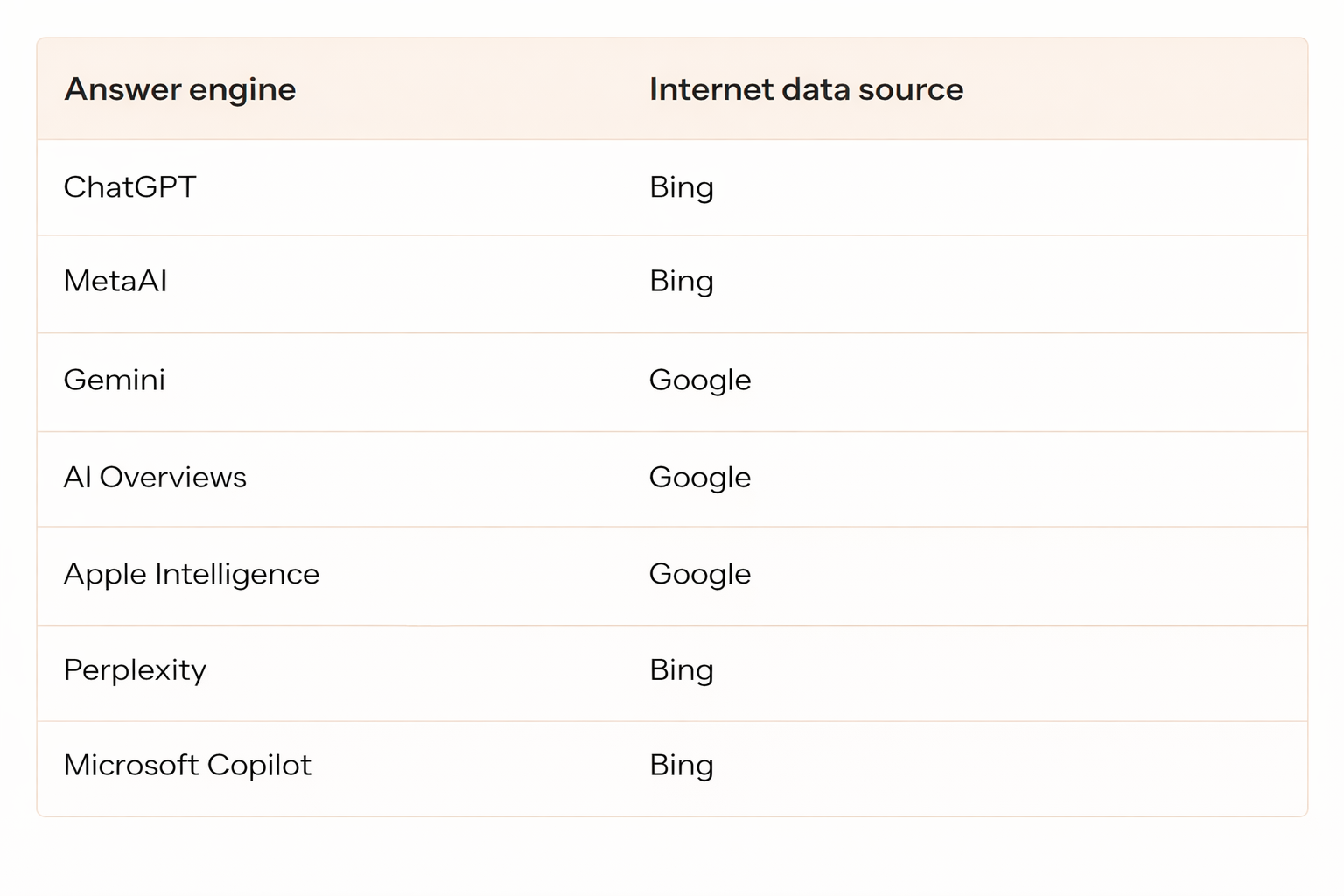
Approximately 73% of ChatGPT Search results overlap with Bing’s organic results. That creates one of the clearest optimization relationships in AI search today: strong Bing SEO frequently translates directly into ChatGPT visibility.
Most brands historically ignored Bing because it represented a relatively small percentage of traditional search traffic. In 2026, that assumption is economically outdated. Bing optimization now produces outsized visibility returns because it feeds directly into ChatGPT’s retrieval layer.
Microsoft’s multibillion-dollar partnership with OpenAI makes this relationship structurally durable.
Traditional SEO strength strongly correlates with ChatGPT citations
Semrush research on Petlibro found that ChatGPT-cited pages ranked for an average of 19 organic keywords. The pattern suggests that traditional organic visibility strongly overlaps with ChatGPT source selection.
Brands that perform well organically tend to accumulate the exact signals ChatGPT values:
- topical authority
- brand recognition
- structured information
- authoritative backlinks
- third-party citations
- E-E-A-T strength
ChatGPT does not replace SEO foundations; it builds on top of them.
Citation patterns compound over time
ChatGPT’s pre-training corpus updates on long cycles measured in months rather than days. Once a brand becomes a recurring cited source across training data and real-time retrieval systems, the citation pattern reinforces itself over time.
The brand accumulates:
- stronger entity associations
- expanded topical authority
- more training-data mentions
- broader third-party validation
- recurring retrieval preference
Brands delaying ChatGPT optimization are competing against incumbents already embedded into the model’s learned authority graph.
For commercial AI SEO services with ChatGPT-specific optimization support, see our AI SEO services page.
How ChatGPT Actually Selects Sources
Most published guidance oversimplifies ChatGPT source selection. In practice, ChatGPT operates through three distinct retrieval systems, each with different optimization implications.
Mechanism 1: Pre-Training Corpus Knowledge
Every GPT model is pre-trained on a massive corpus containing:
- public web content
- books
- academic papers
- forums
- code repositories
- licensed datasets
Brand presence inside this corpus determines what ChatGPT “knows” before any live retrieval occurs.
Wikipedia entries, Reddit discussions, established media coverage, public brand mentions, and structured web content all contribute to this training-layer presence.
This mechanism dominates when ChatGPT answers without browsing or search activation.
Operational implication: historical web presence matters enormously.
Brands absent from the open web conversation are structurally disadvantaged inside the training layer.
Mechanism 2: ChatGPT Search (Bing-Powered Retrieval)
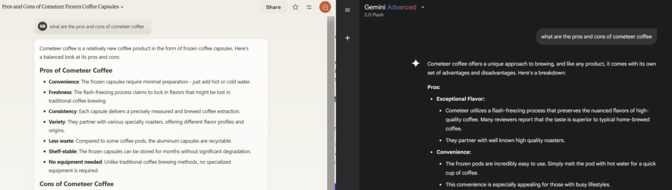
When queries require current information, ChatGPT activates ChatGPT Search and retrieves live results through Bing.
The workflow is:
- query issued
- Bing retrieval triggered
- relevant pages selected
- ChatGPT synthesizes the answer
- citations displayed inline
Approximately 73% of ChatGPT Search results correlate with Bing organic rankings, making Bing SEO one of the highest-leverage visibility investments available for ChatGPT optimization.
This mechanism rewards:
- strong Bing indexing
- structured on-page optimization
- technical SEO health
- crawl accessibility
- authoritative content
- entity recognition
Mechanism 3: Active Web Browsing
When ChatGPT actively browses, the ChatGPT-User agent fetches pages directly from the web.
This browsing layer is less predictable than ChatGPT Search because page selection depends heavily on conversational context and follow-up interactions.
Pages retrieved through browsing may influence answers even if they are not explicitly cited.
This mechanism makes crawler accessibility operationally important. Brands blocking OpenAI crawlers reduce visibility inside active browsing workflows.
ChatGPT Citation Patterns: What Actually Gets Cited
Much of the advice about ChatGPT optimization remains anecdotal. The available research, however, reveals several concrete citation patterns.
Listicle content captures approximately 25.37% of citations
Research from First Page Sage analyzing approximately 957,000 ChatGPT prompts found that listicle-style content appears disproportionately often in citations.
ChatGPT frequently extracts from:
- “best X” articles
- top tools lists
- ranked recommendations
- comparison roundups
- numbered tactical frameworks
The structure aligns naturally with how ChatGPT synthesizes responses.
Operational implication: structured lists are highly extractable.
Wikipedia appears in roughly 48% of citations
Wikipedia remains one of ChatGPT’s dominant citation sources for:
- entity definitions
- factual queries
- historical context
- organizational information
This reflects both training-data weight and live retrieval preference.
Brands with established Wikipedia presence (where notability standards legitimately support inclusion) possess a structural citation advantage.
.com domains dominate citations
Research suggests .com domains account for more than 80% of ChatGPT citations across many query categories.
The reasons are straightforward:
- the public web skews heavily toward .com
- training data historically favored .com properties
- authority heuristics reinforce established commercial domains
Brands operating on non-.com TLDs should still maintain strong .com presence and canonical authority signals.
Reddit is the second most cited website
SEOprofy research found Reddit ranks as the second most cited source in ChatGPT responses.
Reddit matters because:
- it formed major training-data input
- it contains conversational language patterns
- it provides multi-perspective discussion
- it captures authentic user sentiment
Brands with zero Reddit presence lose substantial visibility opportunity.
That does not mean spam posting. It means authentic community participation, expert commentary, AMAs, and substantive contributions inside relevant subreddits.
Strong organic SEO strongly correlates with ChatGPT visibility
Semrush research on Petlibro found that ChatGPT-cited pages ranked for an average of 19 organic keywords.
The implication is important:
Traditional SEO authority remains one of the strongest predictors of ChatGPT visibility.
Brands with weak organic foundations rarely dominate ChatGPT citations consistently.
Brand misattribution remains a real issue
NP Digital research found approximately 27.41% of ChatGPT brand recommendations contain inaccuracies, including:
- capability confusion
- incorrect category associations
- mistaken competitor references
- entity ambiguity
While model quality continues improving, entity clarity and brand disambiguation remain operational priorities.
The 6 ChatGPT Optimization Pillars
These six pillars are calibrated specifically for ChatGPT’s retrieval and citation systems.
1. Bing SEO Foundation
Because of the approximately 73% Bing correlation, Bing SEO is arguably the single highest-impact investment for ChatGPT visibility.
Bing’s ranking model differs slightly from Google’s:
- greater emphasis on exact-match keywords
- stronger weighting for on-page metadata
- more influence from social signals
- less dependence on link velocity
Practical implementation includes:
- Bing Webmaster Tools setup
- sitemap submission
- Bing index monitoring
- schema markup optimization
- exact-match keyword refinement
- ensuring priority pages are indexed in Bing
Most brands underinvest here because they still view Bing through the lens of traditional market share rather than AI visibility.
2. Wikipedia and Authoritative Source Citations
Wikipedia’s dominant citation role makes authoritative-source presence strategically important.
Beyond Wikipedia, ChatGPT strongly favors:
- established media outlets
- government domains
- academic sources
- recognized industry publications
- trusted institutional entities
Practical implementation includes:
- legitimate Wikipedia and Wikidata entity development
- digital PR campaigns
- industry-publication contributions
- research partnerships
- authoritative-source mention building
- ongoing reputation monitoring
The principle is simple:
Appear where ChatGPT already looks for trust signals.
3. Listicle and Comparison Content
Listicles and comparison pages align naturally with ChatGPT extraction behavior.
High-performing formats include:
- “Best X for Y”
- “Top tools for X”
- “[Brand] vs [Competitor]”
- alternatives pages
- ranked comparisons
- structured recommendation lists
Practical implementation includes:
- comparison hubs
- competitive-alternative pages
- structured recommendation content
- numbered frameworks
- extractable summaries
- clearly segmented evaluations
ChatGPT favors content that can be lifted cleanly into synthesized responses.
4. Reddit Citation Surface Building
Because Reddit is heavily cited, brands benefit from authentic Reddit presence.
Effective Reddit strategy includes:
- participating in relevant subreddits
- answering technical questions
- contributing expert commentary
- hosting AMAs where appropriate
- monitoring brand mentions
- engaging naturally with discussions
Promotional behavior generally fails on Reddit. Helpful expertise succeeds.
Threads with strong engagement become more likely to appear in future ChatGPT retrieval and synthesis patterns.
5. Multi-Format Distribution (YouTube + GPTs Marketplace)
Multi-format content expands the surfaces where ChatGPT encounters brand information.
Two channels matter especially:
YouTube
Video transcripts provide machine-readable content with strong topical signals.
Brands with strong YouTube presence sometimes achieve ChatGPT visibility even with relatively modest traditional SEO footprint.
GPTs Marketplace
The GPTs Marketplace provides direct distribution inside the ChatGPT ecosystem itself.
Brands can:
- build niche GPTs
- structure proprietary workflows
- distribute expertise directly
- create repeat user engagement inside ChatGPT
This creates visibility independent of traditional search crawling.
Practical implementation includes:
- video production with transcripts
- podcast transcription
- multi-channel publishing
- webinar distribution
- GPT development
- topic-cluster coverage across multiple media formats
6. E-E-A-T Signals and Brand Mention Networks
E-E-A-T functions as a core trust heuristic inside ChatGPT source selection.
Strong signals include:
- expert authorship
- credential visibility
- sourced factual claims
- transparent organizational identity
- authoritative references
- third-party brand mentions
Brand mention frequency across the web functions similarly to backlinks in traditional SEO. The more authoritative sources discussing a brand, the more trust ChatGPT assigns during retrieval and synthesis.
Practical implementation includes:
- credentialed author pages
- expert bylines
- factual-source citations
- digital PR campaigns
- journalist relationship building
- podcast appearances
- industry-roundup inclusion
- authoritative mention generation
For YMYL-specific E-E-A-T frameworks, see our healthcare SEO guide, finance SEO guide, and SEO for lawyers page.
The ChatGPT Crawler Access Layer
ChatGPT operates three distinct crawlers, each serving a different role in how content enters OpenAI’s retrieval and citation systems. Understanding the difference between them — and configuring access intentionally, is operationally critical.
GPTBot
GPTBot is OpenAI’s training-data crawler. Its purpose is to collect publicly accessible content for inclusion in future GPT model training corpora.
GPTBot identifies itself with the user-agent string GPTBot and respects robots.txt directives. If GPTBot is blocked, future GPT models cannot learn from the blocked content during pre-training. Over time, this reduces the likelihood that the brand appears in ChatGPT’s default knowledge layer.
For most brands, allowing GPTBot access is strategically beneficial unless there are clear commercial reasons not to, such as:
- protected subscription content
- proprietary research
- licensing restrictions
- legal or compliance requirements
ChatGPT-User
ChatGPT-User is OpenAI’s real-time browsing agent.
When ChatGPT actively fetches live webpages during a conversation, it does so using the ChatGPT-User agent. Unlike GPTBot, which crawls systematically for future training, ChatGPT-User operates dynamically in response to individual prompts.
Blocking ChatGPT-User prevents pages from appearing during live browsing workflows, a meaningful limitation because many high-intent commercial and research queries trigger browsing behavior.
OAI-SearchBot
OAI-SearchBot powers ChatGPT Search indexing.
This crawler builds the search corpus used when ChatGPT retrieves current information through ChatGPT Search. It operates independently from both GPTBot and ChatGPT-User.
Blocking OAI-SearchBot prevents content from appearing in ChatGPT Search results regardless of whether the pages perform well in Bing or traditional search.
Recommended robots.txt Configuration
The standard configuration that allows all three OpenAI crawlers:
User-agent: GPTBot
Allow: /
User-agent: ChatGPT-User
Allow: /
User-agent: OAI-SearchBot
Allow: /
Platform-Specific Crawler Configuration
Many CMS platforms and website builders include default crawler settings that unintentionally restrict AI visibility.
Common examples include:
- Squarespace: AI Optimization visibility controls
- WordPress: “Discourage search engines from indexing this site”
- Wix: page-level indexing controls
- Webflow: crawler and indexing toggles
A surprising number of brands accidentally block AI crawlers during site setup and never revisit the configuration.
The Strategic Question Around AI Crawler Access
Some organizations restrict AI crawlers believing it protects content value. In practice, most brands lose more visibility than they preserve.
The reality is straightforward:
- brands allowing crawler access accumulate citations
- brands blocking crawlers gradually disappear from AI visibility layers
Unless there is a clear commercial or legal justification, restricting OpenAI crawlers usually creates competitive disadvantage rather than protection.
For broader technical SEO and crawler-management frameworks, see our technical SEO guide.
GPTs Marketplace: The Direct Content Distribution Channel
The OpenAI GPTs Marketplace is a distribution layer unique to ChatGPT among major AI platforms.
Brands can publish custom GPTs containing uploaded knowledge files, including documentation, case studies, FAQs, proprietary research, and structured datasets, that users access directly inside ChatGPT.
Unlike traditional SEO, this mechanism bypasses crawling entirely. Content enters ChatGPT visibility through intentional publication rather than search discovery.
Common Use Cases for Branded GPTs
Product Documentation GPTs
Support-focused GPTs trained on manuals, onboarding documents, and troubleshooting resources.
Industry Expertise GPTs
Thought-leadership GPTs built around proprietary frameworks, research, or category expertise.
Tool and Calculator GPTs
Interactive GPTs combining OpenAI reasoning with brand-specific methodologies or datasets.
Decision-Support GPTs
Guided evaluation experiences for complex services, software, or product categories.
Content Discovery GPTs
Conversational interfaces that surface a brand’s existing content library more effectively than traditional navigation.
Strategic Positioning of GPTs Marketplace
The GPTs Marketplace works best as a complement to broader ChatGPT SEO rather than a replacement for it.
Marketplace visibility depends on users actively discovering or searching for the GPT itself, which is a narrower audience than the broader ChatGPT user base exposed to organic citations.
Brands already building strong citation presence through the six optimization pillars generally benefit most from GPT distribution.
GPT Publication Workflow
Publishing a GPT typically requires:
- ChatGPT Plus or Team subscription
- GPT Builder configuration
- uploaded knowledge files
- instruction and behavior design
- capability configuration (browsing, code interpreter, image generation)
- category tagging and marketplace publication
For broader multi-platform content distribution strategies, see our AI and Content guide.
How to Measure ChatGPT Visibility
ChatGPT visibility requires a different measurement framework than traditional SEO because standard rank trackers do not monitor AI-generated responses.
Primary ChatGPT Visibility Metrics
Citation Frequency
Track how often the brand appears for priority prompts across ChatGPT responses.
Platforms such as AthenaHQ, Profound, and Semrush AI Visibility Index automate large-scale prompt monitoring.
Share of Voice
Measure whether your brand or competitors appear most frequently within defined prompt categories.
This is the AI-search equivalent of competitive visibility tracking in traditional SEO.
Citation Accuracy and Sentiment
Monitor whether ChatGPT:
- describes the brand accurately
- associates the correct capabilities
- positions the brand favorably
- confuses the entity with competitors
This matters operationally because industry research still shows approximately 27.41% brand misattribution rates.
Source URL Citation Tracking
When ChatGPT Search is active, source URLs are displayed directly in responses.
Tracking which pages receive citations provides actionable optimization feedback.
Secondary ChatGPT Metrics
Additional supporting indicators include:
- Bing organic rankings
- Wikipedia entity strength
- Reddit mention frequency
- digital PR and media visibility
- GPTs Marketplace engagement
- broader web mention frequency
Manual Testing Still Matters
Even as AI visibility platforms mature, manual testing remains operationally valuable.
Best practices include:
- testing prompts in clean browser sessions
- separating ChatGPT default mode from ChatGPT Search mode
- monitoring competitor citations
- checking whether brand positioning aligns with intended messaging
AI outputs remain probabilistic. Human review still surfaces patterns automated systems miss.
For broader measurement frameworks, see our SEO KPIs guide.
8 ChatGPT SEO Mistakes to Avoid
Ignoring Bing SEO
Traditional Bing traffic may be small, but Bing powers much of ChatGPT Search. Ignoring Bing means sacrificing a disproportionate ChatGPT visibility opportunity.
Blocking OpenAI Crawlers
Blocking GPTBot, ChatGPT-User, or OAI-SearchBot removes visibility across training, browsing, and search layers.
Competitors with open access accumulate citations while blocked brands disappear.
Treating ChatGPT as One Retrieval System
ChatGPT operates through:
- training-corpus knowledge
- ChatGPT Search
- active browsing
Each requires separate optimization tactics. Brands optimizing only one layer consistently underperform.
Publishing Generic AI Content at Scale
Unedited AI-generated content rarely earns citations because it lacks:
- original insight
- authoritative sourcing
- expert framing
- unique perspective
- strong entity signals
AI works best as an acceleration layer combined with human expertise.
Skipping Wikipedia When Notability Exists
Wikipedia appears in roughly 48% of ChatGPT citations across many categories.
Brands that legitimately qualify for Wikipedia presence but avoid it create structural disadvantages against competitors with established entities.
Ignoring Reddit as a Citation Surface
Reddit is one of ChatGPT’s most heavily cited platforms.
Authentic community participation matters. Promotional posting usually fails.
Producing Only Long-Form Content
Long-form guides matter, but listicles and comparison content align far better with ChatGPT extraction behavior.
The approximately 25.37% listicle citation rate makes format diversification strategically important.
Expecting Immediate Results
Training-corpus visibility develops over months rather than days.
Brands treating ChatGPT SEO as a short-term campaign often abandon investment before citation patterns compound.
Frequently Asked Questions
What is SEO for ChatGPT?
SEO for ChatGPT is the discipline of optimizing content, technical infrastructure, and brand presence so ChatGPT retrieves, cites, summarizes, or recommends a brand inside AI-generated responses.
Unlike traditional SEO, which targets rankings on a search engine results page, ChatGPT SEO targets inclusion inside synthesized answers across three retrieval systems:
- training-corpus knowledge
- ChatGPT Search
- active browsing
The discipline combines Bing SEO, entity optimization, citation-surface building, structured content formatting, E-E-A-T strengthening, crawler configuration, and GPT distribution strategies.
How do I rank in ChatGPT?
Six operational pillars consistently influence ChatGPT visibility:
- Bing SEO foundations
- Wikipedia and authoritative-source citations
- Listicle and comparison content
- Reddit citation-surface building
- Multi-format distribution including YouTube and GPTs
- E-E-A-T signals and brand mention networks
Brands implementing all six together consistently outperform brands relying on isolated tactics.
Why does Bing SEO matter for ChatGPT?
ChatGPT Search relies heavily on Bing’s search infrastructure.
Approximately 73% of ChatGPT Search results correlate with Bing organic rankings, making Bing optimization one of the highest-leverage investments for ChatGPT visibility.
Microsoft’s multibillion-dollar partnership with OpenAI makes this relationship structurally significant rather than temporary.
What is GPTBot and should I block it?
GPTBot is OpenAI’s training-data crawler.
Blocking GPTBot prevents future GPT models from learning from your content during pre-training, reducing visibility in ChatGPT’s default knowledge layer over time.
Most brands benefit from allowing GPTBot access unless legal, licensing, or proprietary-content concerns justify restriction.
What is the GPTs Marketplace?
The GPTs Marketplace is OpenAI’s directory of custom GPT experiences.
Brands can publish GPTs trained on proprietary documents, FAQs, frameworks, and datasets to create direct visibility inside ChatGPT.
Common use cases include:
- support assistants
- research tools
- decision-support systems
- educational GPTs
- branded content interfaces
The Marketplace works best alongside broader ChatGPT SEO rather than as a standalone strategy.
How is ChatGPT SEO different from Perplexity or Gemini SEO?
Each AI engine uses different retrieval and citation patterns.
ChatGPT heavily favors:
- Bing-indexed content
- Wikipedia
- listicles
- .com domains
Perplexity leans more heavily toward Reddit and research-style synthesis, while Gemini relies more strongly on structured data and Google ecosystem signals.
Cross-platform optimization matters because citation overlap between engines remains surprisingly low.
How do I measure ChatGPT visibility?
Measurement frameworks typically combine:
- citation frequency tracking
- share-of-voice monitoring
- citation accuracy analysis
- Bing ranking visibility
- Reddit mention tracking
- entity strength monitoring
- AI-referred traffic analysis
Platforms like AthenaHQ, Profound, and Semrush AI Visibility Index automate much of the process, though manual prompt testing remains valuable.
How long does ChatGPT SEO take?
Different visibility layers operate on different timelines.
- Bing and ChatGPT Search improvements can appear within weeks.
- Active browsing visibility updates relatively quickly once crawler access is configured.
- Training-corpus influence compounds over multi-month retraining cycles.
The fastest gains usually come from technical access and Bing SEO improvements. The most durable gains come from entity authority and long-term training-corpus inclusion.
Your Next Steps
You now have the complete operational framework for SEO for ChatGPT.
The fastest way to apply it is to:
- audit current ChatGPT visibility
- verify crawler accessibility
- strengthen Bing SEO foundations
- expand authoritative citation surface
- build listicle and comparison assets
- improve entity recognition across the open web
Grow Your Visibility Beyond Google
Capture leads and traffic from emerging search platforms like ChatGPT, Perplexity, and Google AI.
Writers

Stephen Aloy
Lead SEO Consultant, WebFX
Stephen Aloy
Lead SEO Consultant, WebFX